
Getting an AI agent into production can feel like the finish line. The process has been identified, the agent has been configured and tested, and it is finally performing work within the business.
But go-live isn’t the end of the agent’s lifecycle.
Once an AI agent starts working in a real business environment, it needs to be maintained. That doesn’t necessarily mean someone needs to constantly watch over it or rebuild it every few months. It means making sure the agent continues to perform as expected as the business around it changes.
Processes change. Systems are updated. Business rules evolve. Employees find new ways to use technology. And sometimes an agent encounters situations that weren’t common during its initial testing.
AI agent maintenance is how organizations respond to those changes and keep an agent aligned with the work it was designed to perform.
So, what does that maintenance actually look like after go-live?
What Is AI Agent Maintenance?
AI agent maintenance is the ongoing process of reviewing and adjusting an agent after it has been deployed.
Testing before deployment is important, but production introduces real transaction volumes, exceptions, system changes, and user behavior. Maintenance helps make sure the agent continues operating within the expectations established for it.
Maintenance isn’t about continually changing an agent simply because you can. It should have a reason behind it: keeping the agent aligned with the process and outcomes it is responsible for.
Why Do AI Agents Need Maintenance After Go-Live?
An AI agent can continue performing exactly as it was designed and still become less effective over time if the environment around it changes.
Consider an agent responsible for part of an order process. If the company changes an approval rule, adds a new order type, or changes how information enters the ERP, the agent may need to be updated to reflect the new process.
There is also a difference between testing an agent and seeing it operate at scale. Once the agent is working through real transactions, teams may discover exceptions or edge cases that weren’t common enough to appear during testing.
That doesn’t necessarily mean the original implementation failed. It means the organization now has more information about how the agent performs in the real world.
Maintenance gives the business a way to respond to that information.
What Does AI Agent Maintenance Actually Include?
The amount and type of maintenance will depend on what an agent does, how many systems it interacts with, and how much authority it has. But there are several areas organizations may need to revisit after go-live.
Reviewing Performance and Results
Teams need visibility into whether the agent is completing the work it is supposed to complete and whether the results match expectations.
The intention is not necessarily to review every individual action. It is to identify patterns that suggest something needs attention.
Updating Instructions and Business Rules
The rules an agent follows at launch may not stay the same forever.
A company might change an approval threshold, introduce a new policy, modify a workflow, or change which situations require human review. When the business rule changes, the agent responsible for carrying out that rule may need to change too.
Maintaining Integrations
Agents often need to interact with ERP, CRM, data platforms, APIs, or other enterprise applications to perform work.
If one of those systems changes, the connection the agent relies on may also need attention. An application update, API change, new data field, or altered workflow could affect how information moves between the agent and another system.
Maintaining the agent isn’t always about changing the AI itself. Sometimes it is about maintaining the environment that allows the agent to do its job.
Reviewing Permissions and Access
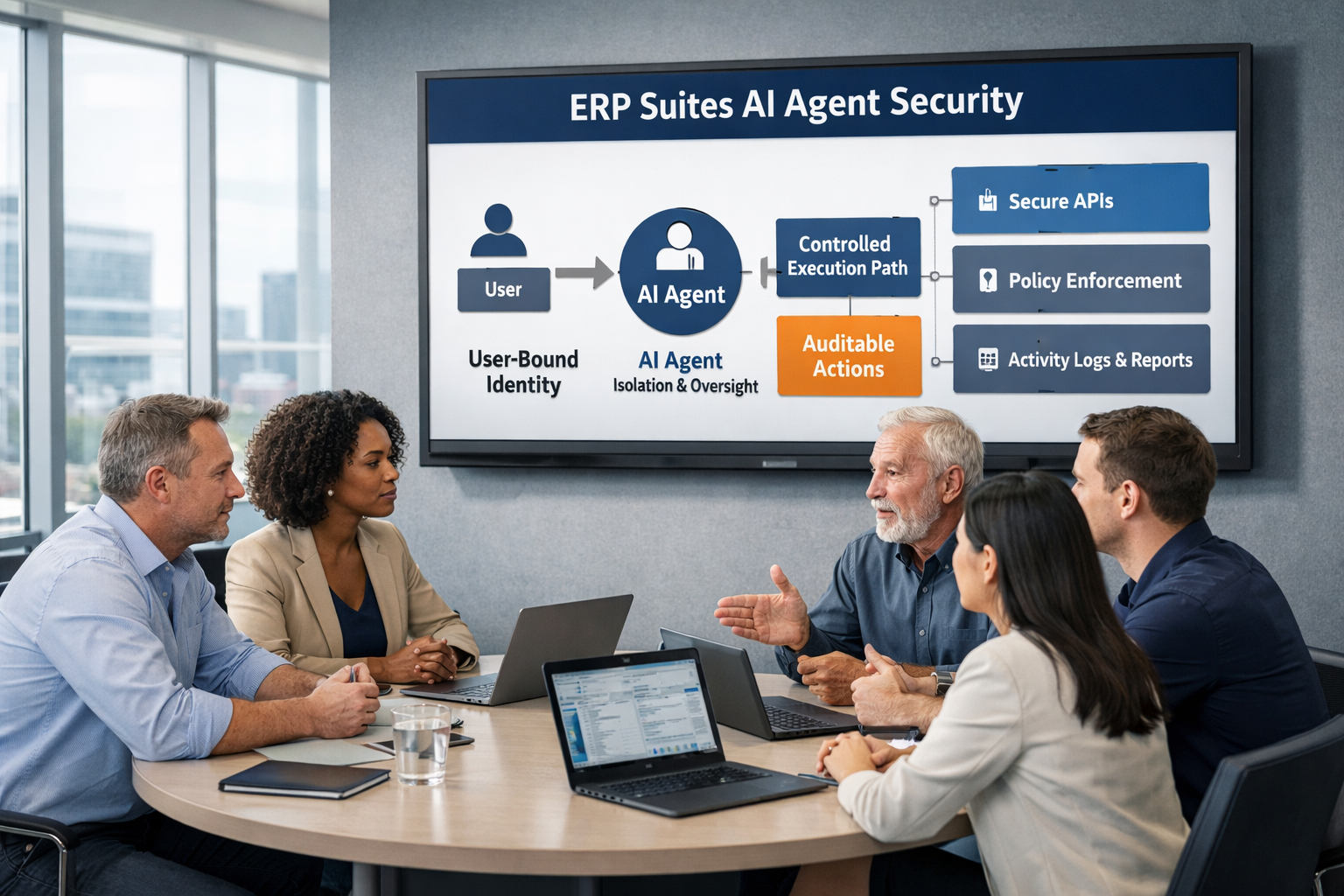
An agent should only have access to the systems, data, and actions required for its role.
As responsibilities change, those permissions may need to be reviewed. An agent taking on a new task may require additional access, while an agent that no longer performs certain work may no longer need the permissions associated with it.
Improving Exception Handling
Exceptions can be especially useful for understanding where an agent may need adjustment.
If an agent repeatedly sends the same type of transaction to a person for review, for example, the organization can investigate why. Maybe that exception should continue requiring human judgment. Or perhaps the situation has become predictable enough that the agent can be given clearer instructions for handling it.
The objective isn’t necessarily to eliminate every exception. Some decisions should remain with people. Maintenance helps organizations determine which exceptions are appropriate and which ones point to an opportunity for improvement.
How much ongoing work these areas require will vary. A relatively focused agent working within a stable process may require less attention than an agent operating across multiple systems, handling more complex work, or supporting a process that changes frequently.
How Do You Know If an AI Agent Is Still Performing as Expected?
Maintaining an AI agent requires knowing what good performance looks like in the first place.
That starts with the reason the agent was implemented.
If an agent was introduced to reduce manual invoice processing, for example, simply knowing that the agent is running doesn’t tell you whether it’s delivering the expected result. You may want to understand how many invoices it successfully processes, how frequently exceptions occur, how much human intervention is still required, and whether processing time has improved.
The right measures will depend on the process.
For one agent, transaction completion may be important. For another, exception rates or processing time may matter more. In some processes, accuracy and the frequency of human intervention may be the most useful indicators.
Teams should also pay attention to changes over time.
If an agent that historically required very little intervention suddenly begins escalating more work to employees, that can be a signal to investigate. The problem could be with the agent, but it could also come from a system change, new data, or a change in the business process.
Monitoring helps you identify that something has changed. Maintenance is what you do with that information.
How Often Should You Review an AI Agent?
There isn’t one maintenance schedule that makes sense for every AI agent.
An agent performing a high-volume or business-critical process may warrant closer review than one handling a smaller, lower-risk workflow. A newly deployed agent may also need more attention while the organization learns how it behaves in production.
Over time, reviews may become more routine as performance becomes predictable.
But not every review needs to happen because a date appeared on the calendar.
Some maintenance should be event-driven. If a connected system is upgraded, a business process changes, a new policy is introduced, or performance begins moving outside expected ranges, that can be a reason to review the agent.
This is why organizations should think about maintenance as both routine oversight and a response to change.
The important part is having a process for recognizing when an agent needs attention rather than waiting until someone notices that something has gone wrong.
Who Is Responsible for AI Agent Maintenance?
AI agent maintenance usually isn’t exclusively an IT responsibility or exclusively a business responsibility.
IT may understand integrations, security, access, system changes, and the technical environment supporting the agent. But the business understands whether the agent’s work still reflects the actual process.
For example, IT may be able to confirm that an agent is successfully communicating with the ERP. The process owner may be better positioned to recognize that an approval rule no longer reflects how the department operates.
Those exact responsibilities should be established before an agent goes live. Teams should know who monitors performance, who reviews exceptions, who can approve changes to the agent, and who needs to be involved when a business or system change affects its work.
Clear responsibility makes maintenance part of normal operations rather than something the organization only thinks about when a problem occurs.
Final Thoughts
AI agents shouldn’t be treated as technology you deploy once and never revisit. But that doesn’t mean they require constant rebuilding or supervision either.
In practice, AI agent maintenance is about making sure the agent continues to reflect the business it serves. That means monitoring its performance, responding to exceptions, maintaining its connections and access, and updating it when processes or requirements change.
The more important question after go-live isn’t simply, “Is the agent still running?” It’s whether the agent is still doing the right work, under the right rules, with the results the business expects.
ERP Suites helps organizations implement and support enterprise AI agents with the governance, integrations, and ongoing oversight needed beyond initial deployment. As your processes and systems evolve, make sure your AI agents can evolve with them rather than becoming another piece of technology that quietly falls out of alignment.
Topics: