
AI Agents for JD Edwards: Why They’re Easier Than Ever Before
July 27th, 2026
24 min read
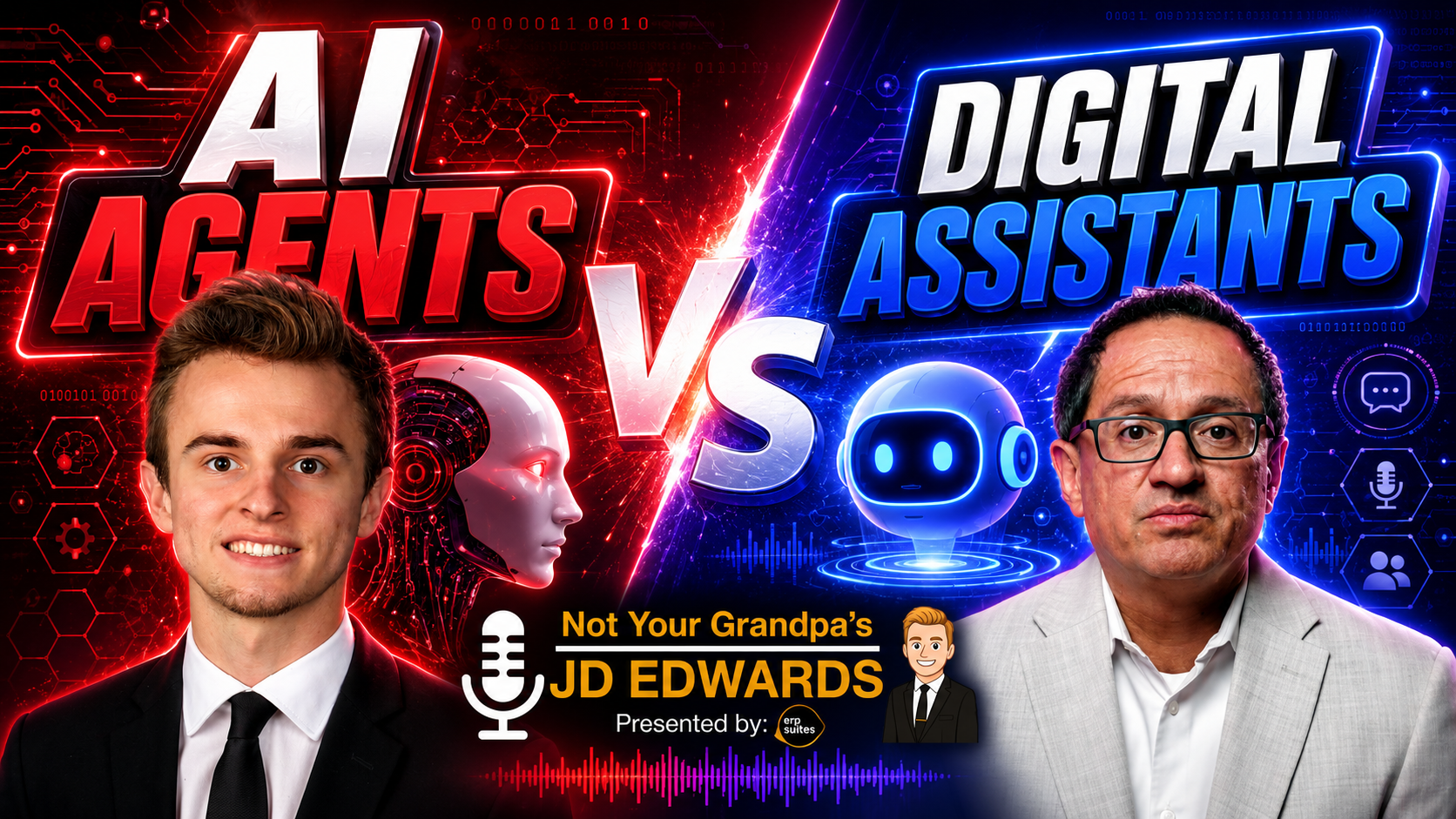
In this episode of Not Your Grandpa's JD Edwards, Kevin Van Horn explains why the platform behind an AI agent is just as important as the AI itself. Learn how Oracle Cloud Infrastructure (OCI), AIS, orchestrations, and native JD Edwards integration make it possible to deploy AI agents without replicating data, rebuilding security, or migrating to the cloud. The discussion also covers how to identify the right AI use cases, why JD Edwards should remain the system of record, and how organizations can begin adopting AI by solving real business problems.
Table of Contents
- Introduction: Why the AI Platform Matters for JD Edwards
- OCI, AIS, and Real-Time Connectivity Explained
- Why Native JD Edwards Integration Beats Data Replication
- Cloud Deployment, Orchestrations, and AI Readiness
- Security, Governance, and Working Within JD Edwards
- Keeping JD Edwards as the System of Record
- How Users Interact with AI Agents
- Choosing the Right AI Use Cases and Avoiding Common Mistakes
- Final Advice: Why JD Edwards Customers Are Closer to AI Than They Think
Introduction: Why the AI Platform Matters for JD Edwards
Introduction: Why AI Agent ROI Matters in JD Edwardss adding AI agents to JD Edwards still a huge custom project, or is it becoming much easier because of the platform behind it? And if AI agents can work directly with your JDE data, workflows and security, what's that change for your team?
In this episode, Kevin Van Horn from ERP Suites explains how OCIAIS, orchestrations, dashboards, and real time JD connectivity are making AI agents more practical for JD Edwards users. By the and you'll understand why the platform matters, what makes this different from a generic AI tool and how to decide where an AI agent actually makes sense in your JD Edwards environment.
Welcome back tonight your grandpa's JD Edwards podcast for JD Edwards teams that are modernizing, improving operations and asking better questions about what comes next. I'm your host, Nate Bushfield, and today we are talking about a question a lot of JD teams are asking right now.
Is adding AI agents to JD Edwards actually easier than it used to be?
The answer depends a lot on the platform behind the agent. If you have to replicate your data, build a separate data lake, create new security rules, and run AI outside of JDE, that can get complicated fast. But when the agent is built to work with JD Edwards in real time, the conversation changes.
Joining us today is Kevin Van Horn, an AI expert from ERP Suites to talk about your how ERP Suites is using OCIAIS, orchestrations and JDE native workflows to make AI agents much more practical.
Kevin, welcome back to the show, now a reoccurring guest.
So start with a little bit of background for the people that maybe didn't catch your episode a few weeks ago.
OK.
Yeah, Thank you.
Yeah, It's great to be back, Nate. So thank you for having me. It's I've got World Cup fever and I got a new pair of glasses, right. So, you know, at my age, you know, these are small victories.
Yeah.
So I'm the managing Director here at ERP Suites related to our artificial intelligence, our agents. I spent, I've got about 30-4 years of experience with JD Edwards. I was a customer and then I joined JD Edwards back in 1994 and I stayed through the Oracle years until essentially 2020.
And since then as Oracle decided to shift to the cloud, I decided I wanted to get back and serve the JD Edwards user community. So I'm, I'm thrilled to be here at ERP Suites and thanks for having me back.
Yeah, of course we're thrilled to have you at ERP Suites. Let me tell you, it's great to have these conversations about AI and it makes it a lot easier when our team is growing.
So let's start here.
Sure.
Why does the platform behind an AI agent matters so much for JD Edwards customers?
OCI, AIS, and Real-Time Connectivity Explained
Yeah, yeah. And, you know, and, and honestly, the platform is the game changer, right? It's, it's, it is that whole new ball game, right? You know, an agent's only as good as, as the platform it's built on and the connection to JD Edwards, right?
The platform decides, you know, if that connection is smooth, if it's real time or you have to go through all kinds of different steps to make that agent work, right? You know, the, the idea behind this is, is the simpler the better, right? You know what I mean that the more complicated an AI agent gets to develop and deploy, you know, the, the harder it is to use and maintain, right?
So, you know, a lot of, you know, generic AI tools are going to want to copy your JD Edwards data, right? Not use your JD Edwards data as that single source of the truth, right? And that's, you know, we talk about that all the time, right?
You know, having having the agents built on OCI, right, is a market leading, you know, tool from Oracle that gives us all the, you know, all the different tools we need to develop, develop agents that are powerful and that work with JD Edwards, right.
So, you know, the idea is, you know, not to replicate JD Edwards, but to give JD Edwards the superpower it needs, right?
Yeah, Yeah. So you're saying they're like the agents are built in OCI and they're, but they're really built to work with JD Edwards in real time instead of using like a replicated server or something like that, right.
Yeah, yeah, yeah, Yeah, exactly.
And you know, when I said it's built in OCIOCI just means Oracle Cloud Infrastructure, right? It's a, it's a big long name that Oracle turned into its acronym, which is, which is usual, right, But simplest term.
That's where the agent lives and works, right? You know, it, it gives our agents the OCI has that toolkit that, that, that helps us develop, build the agents, right? But it also gives things like intelligent document processing. So it, it can read PD FS and understand the data within it, right? It gives us the ability to create dashboards and analytics and those AI services, right?
But so the agent kind of lives there in OCI, but JD Edwards can stay right where it always has been, Right, Right. Right where it needs to be to help you run your business. So you don't have to drag JD Edwards over to OCI or, you know, or vice versa from that standpoint.
So it's it's the easiest way is OCI is where the agent lives and works on, JD Edwards is where the business happens.
Right.
Yeah, that's perfect.
So what role does AIS play in making this easier?
Yeah, Yeah. And, and, and that's a great question. I mean, AIS Application Interface Services, right? It's, it's a, it's a server that 99% of JD Edwards customers always have already have.
It's basically the doorway into JD Edwards, right. And and you know, like I said, the good news is almost every JD Edwards just has it right, because JD Edwards, you know, it was really kind of meant to work with other systems, right. So most of our customers integrate JD Edwards with other third party systems. So they utilize this kind of AIS server process, right?
So the, that AIS server allows our agents to have that real time conversations with JD Edwards, right? Pulling those live data in and out, right? It keeps the agent working from what's true real time right now, you know, not stale replicated data, right?
And so it skips that data copying and, and that allows JD Edwards to continue to be that single source of the truth, right? No parallel systems, no parallel data, no trying to keep things In Sync. You're, you know, the, the, the agents working off of real live JD Edwards data, right?
Why Native JD Edwards Integration Beats Data Replication
So is that the main difference between working with a bolt on solution or a generic AI agent solution, like when they're utilizing replicated data or even data lakes?
Is that the main difference there is that it just takes more time because you have to replicate your data from JD Edwards, move it from here to there and then move it back. Is that the main difference or is there a little bit more to that?
I, I think there's a little bit more to that. I mean, you know, clearly you, you touched on a an issue, right? You know, the, you know, JD Edwards is, you know, depending upon your business, right? And the, and the type of processes that you run, there can be a lot of data, right.
Yeah.
You know, so, you know, just moving that data, you know, yanking that data out of JD Edwards and you know that that's no small task, right?
But you know, so so yes, that is one of the issues.
The the other issue though, that you know, that I would think about more is that, you know, how fresh is that? How often do you have to do that?
Right? You know, you know, you know, if you're talking about things like sales orders or account reconciliations or things of that nature where we, you know, an agent can really do a lot of have the heavy lifting for you, You know, how often would you have to replicate that data in order for that agent to work on real live data, right.
So it's it's, you know, so yes, you know, part of it is is that replication process. But the bigger kind of more fundamental or philosophical reason is why do you want two sources of the truth, right? Or why do you want to have two separate sets of data that you're that you're trying to figure out where to work from, right?
You know, we know JD Edwards is where you do business. So let the agent work where you do business, right? And so that to me, that's the bigger issue, right? You never are worrying about old, stale data.
Yeah.
It saves time. It saves the headache. There's so many issues that can happen when you're replicating that data. Maybe that data isn't as fresh as you think. Maybe there's a change that happens in the time that you're working with it. There are so many things I can go into this where to be able to work on your JD Edwards natively will save you not only time, not only effort, but it'll save you the headache and the heartache of getting something wrong because something has changed.
And that amount of time. I mean, think about it. You know, one of you know, one of the things we always talk about when it relates to our agents is, you know, you know, them being digital workers, right? But they work 24 hours a day, seven days a week, right?
So they're not going home at 5 O clock, right? You know, they're not coming back at 8:00 in the morning, right? They're working in the middle of the night. They're working when orders are coming in. They're they're, they're working when JD Edwards programs are running, you know, on a schedule or overnight, they're checking all that information.
If the date is outside of JD Edwards, how does that work?
Right?
I mean, there's so much overhead that would have to make you would have to put in place in order for an agent to truly do its job the way that you want it to do its job. If you're having to replicate that data at, you know, any given point of time because that agents always working.
Yeah. And you bring up such a great point of because it's working 24/7, you would basically have to have someone also working 24/7 to just keep replicating the data. And that cuts away the main purpose of an AI agent, which is to stop the overtime, right?
It's just to stop the overworking of some of these people, right?
Or you just have to make the decision to say, well, I have an agent that can work 24/7, I just can't let it work 24/7, right? Which kind of defeats the purpose as well, right?
Exactly.
Cloud Deployment, Orchestrations, and AI Readiness
So we're talking a lot about OCI right now.
Does having AI agents on OCI mean that your JDE has to move to the cloud or what does that look like?
No, no, no, no, no, no.
You know, that's the great part about that, right? It's, you don't have to have any cloud migration to start playing or using our AI agents.
You know, I mean, obviously if you want to, that's great, right? Your JD Edwards can live on Prem, it can live in a private cloud. It can live in a public cloud like OCI or AWS or wherever it's hosted today, right?
The agent, the agent runs on OCI no matter where JD Edwards lives, right? The connection is always through that AIS server and and the orchestrations that that server calls in order to reach out and touch JD Edwards wherever it might be.
So, you know, and, and you brought up a a cool point before and it was like, you know, when I think about it, you know, this conversation is like, yeah, I want, Jay, I want the great JD Edwards customers to realize that that this the AI agents, you're closer than you think, right?
You know what I mean? Like, like all the things that you have set up to, to make your JD Edwards, you know, run your business the way you want to run your business. It's the same things that the our AI agents utilize to actually give you that superpower to JD Edwards, right?
There's, there's really not much you have to change, right? You know, it's like wherever your JD Edwards live, rather you're running it on an iseries or you're running it on a public cloud or, you know, wherever it lives. If you have an AIS server and you're, you know, at least on a, a, a more modern upgrade, you know, release where you have orchestrations, our AI agents can start running today.
Yeah, you don't need that full cloud migration just to start exploring AI agents. You start it right now on a yes, on an updated tools release, yes, you need orchestrations, but that is a very common thing that people have in this day and age.
And hell, if you don't have orchestrations right now, you should probably look into it because the orchestration saves you a tremendous amount of time. And yes, so do AI agents in that really does open the door.
But I mean, shoot, like you need orchestrations in your business these days.
But talking about how things are a little bit easier, how does using JD security and workflows make AI agents even easier to adopt?
Security, Governance, and Working Within JD Edwards
Yeah.
You know, if you think about, you know, why people would be hesitant about AI agents, you know, security's probably the thing they get nervous, right?
If you, if you think about it, it's, it's I've had this conversations with with a lot of different customers and it's funny. And it's like, well, I don't want that agent just going out and doing whatever it wants on whatever date it wants.
And you're like, understand, right. It's not what we want either. That's not what the agent wants to do either, right.
You know, the, the, the great thing about this is that there is no kind of separate security matrix that you need to set up to have the agent run.
Yes, the agent lives within OCI, but the agent, you know, we connect into JD Edwards and it understands your JD Edwards security profiles, right?
So all the work that you've done, you know, this is just more of that theme, right? You know, all the, all the work you've already done, all the things that you already have set up are what our AI agents utilize to help you, you know, make JD Edwards a a more powerful tool.
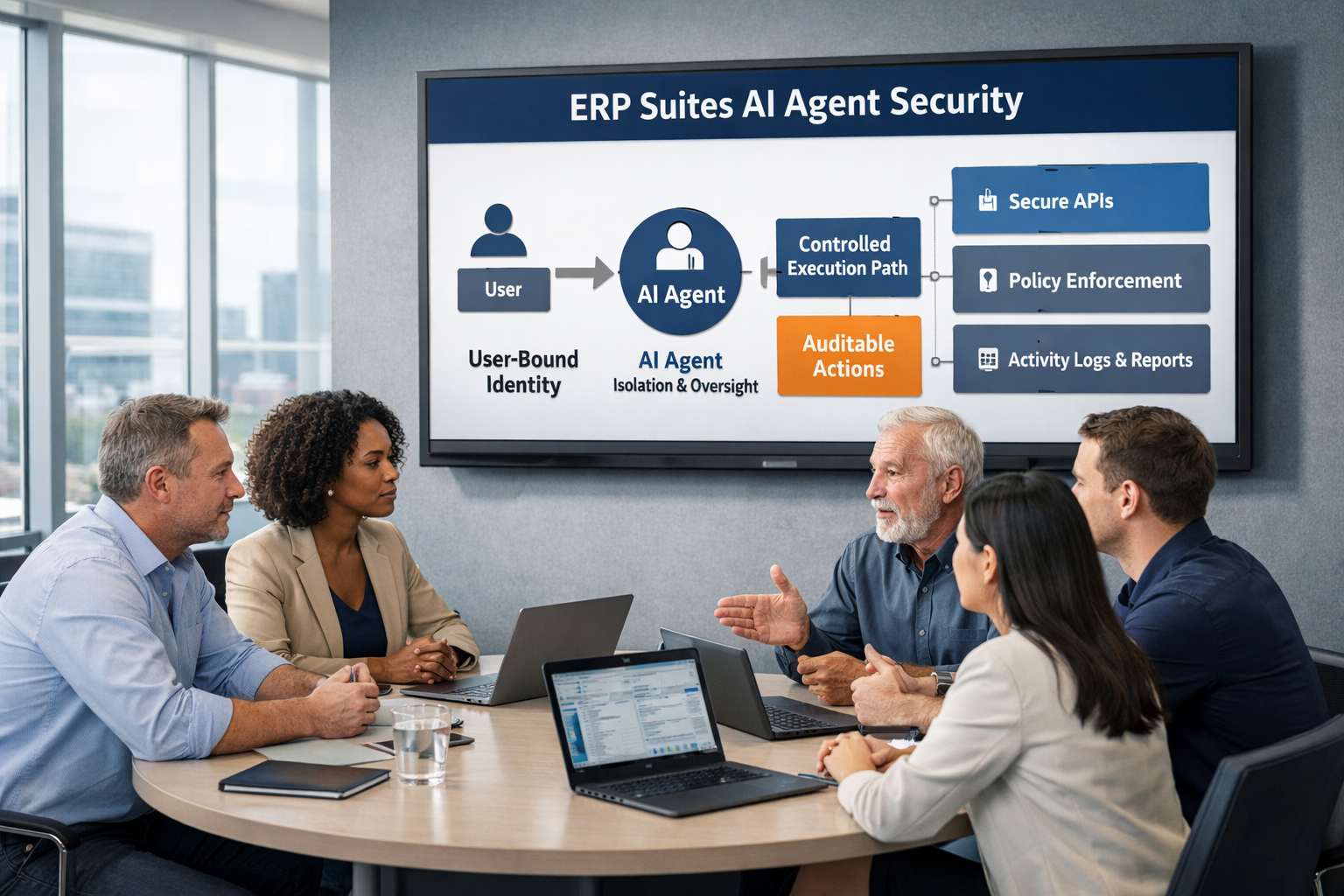
So, so no duplicated setup of security, right? There's no kind of rogue agents that would that have the this, this, you know, unfettered or unlimited security, you know, it, it understands the JD Edwards security profile. It's assigned that profile and it will live within that profile, right?
So if there's data it can't touch, it can't touch it, right? It it doesn't work it, you know, you know, and, and obviously there's guardrails that that there's guardrails within the agent as well as, you know, what business processes am I trying to accomplish, right.
So it's not going off and you know, it's not Skynet, it's not going out trying to figure out all these different things to do. It's trying to improve a business process for you and it knows and understands your JD Edwards security.
So another thing JD Edwards customers don't have to worry about.
Yeah.
And let's focus on that last point a little bit more.
What is it truly mean for the agent to understand JD security?
Well, it what it means is is, you know, your compliance officers, your your, IT, your security. They don't have to create new permissions. A new security matrix is just to get AI agents into their organization.
You know, and our last podcast, we talked about, you know, RAA agents being digital workers, right?
You know, if we think about these as digital workers, these digital workers are assigned a, a security profile, right? And just like what's exist in JD Edwards today, right?
So you don't have, you know, you don't have to create a, you know, a, a side or an extra set of security layers for these digital workers, right?
What that means is they're only allowed to see what they're allowed to see. They're only allowed to act upon, you know, the way that, you know, the security profile allows them to act.
You know, an AP for instance, that might mean seeing invoices that are actually there to hand, you know, it within a certain company, right? Or you know, being able to review payments but not enter pay, you know, you know, execute payments, right? Things of that nature.
So the the agents will follow the same business logic, same security logic that JD Edwards users do, right? Everyday.
So like what? But why would that matter? You know, like if you do give your AI agent or digital worker like full control, like what is that like really such a bad thing?
I mean, yes, obviously I've seen a lot of movies where it says, yes, that's a very bad thing.
It seems bad, right?
Yeah.
Why does that matter to IT and finance leaders that you can control this tool?
Yeah, well, I mean, it's it's all about compliance and governance, right?
I mean, you know, you know, you know, when when companies are audited today, they go through that process so that they understand roles and responsibilities, you know, and and that's all signed off now with this advent of digital workers, you know, they need to do that the same thing, right?
And these digital workers need to be compliant, right, And need to have governance associated with it.
So, you know, the last thing IT and finance needs to worry about is some, you know, rogue person, you know, working at 2:00 in the morning with unlimited security, right?
They don't, you know, and, and by utilizing, you know, the, the JD Edwards security and the matrix that's set up today, you know, they can feel confident and comfortable of that happening at 2:00 in the morning when people are sleeping, right?
They get real auditability of the, the workers based upon that security matrix as well, right?
And the fact, you know, and we kind of have to go back to that thing that we talked about, you know, because we didn't have to duplicate any data. There's nothing that's happening outside of JD Edwards, so you don't have to worry.
The JD Edwards stays the system of record. You're you're not having these side systems that are doing rogue journal entries or whatnot.
You know, JD Edwards is the system of record. It's security is the system of record. And our agent works within that, you know that framework.
Keeping JD Edwards as the System of Record
Yeah.
Hey, perfect, perfect.
Jumping off point to this next question, How does keeping JD as a system of record really reduce the risk that some of these companies are facing?
Yeah.
I mean, you know, one of the reasons most of the, you know, most of our, our, our customers and, and the great Jade Edwards community, you know, utilize JD Edwards is because of, of it being that single source of the truth, right? That that, that, that one, that one ERP record that that they, that they value so much.
But you know, we talked about it already too. Since we're not duplicating data, there's no stale data. There is no kind of since there's no duplication of it and there's no action upon it outside of JD Edwards, there's no contradictions between data. There's no reconciliations between what's in and out of JD Edwards, right?
Yet there's no duplicate. There's there's no duplication of of duties. You know, both from a system of securities, nothing extra to maintain and you know, update updates land where the work is actually happening, right?
So AI stays true to that JD Edwards process, right? It's not running outside of JD Edwards, right?
You know, I love the fact that, you know, the agent isn't replacing JD Edwards. It's working right in JD Edwards alongside JD Edwards, with JD Edwards still being that single source of that truth, that system of record.
So let's shift a little bit further at sure, what once the agent is actually running, what is the user, the user actually see and do?
How Users Interact with AI Agents
Yeah, that's that's the fun part about the agents, right?
You know, the interaction with the agent is, is, is really meant to be very practical, right? You know what I mean? You know, when you go back and you think about, you know, this is, hey, this is a digital worker. Cool, right?
OK, well, you know, let's let's understand how you would work with this digital worker, right?
You just can see exactly what the agents doing at any point of time, right? What they've done, what they're doing, what they're going to do, right? But they kind of stay in that driver's seat, right?
You know, the experience can be different for for any company, right? But, but typically the agent, you know, the, the, you know, what the users will see is a dashboard, right?
That helps them understand a whole bunch of things about the agent, right? And all these things can happen in no particular order, right? It's, it's, it's configurable to however they want to manage and, and, and interact with the agent.
But things like KP is about the health of the business process that that agent is trying to improve, right. You know, whether it's the AP agent, you can see what, you know, how the AP agent has impacted your, you know, day's payable outstanding. You know how many one touch invoice, how many, how many invoices have been processed via like one touch, right? How many exceptions have been generated, right?
You can see kind of that the the the real time action, the tasks, right, That the that the agent performing you can and most importantly, you can see the exceptions, right? You have those exception dashboards.
You know, you know, this is you know, for a lot of our agents, that's that, you know, that's the gold, right? It, it, it's, you know, you, you know, customers want their people managing problems, right? And solving problems for them, right?
Where in the past they would spend 90% of their time working on things that are not problems because they have to figure out if it's a problem, right? And now the system, the agent can figure out if it's a problem and give them that ability to focus on, you know, those, those truly problematic wants, right?
So, so yeah, it's it's cool. I mean, it's a new modern field to JD Edwards. It's a dashboard. It, you know, you have that view of it. You can look at exceptions, you can look at processing, you can look at, you know, KPI improvements. You can see all of that information real time kind of a cockpit control panel for that digital worker.
Yeah. And that dashboard is very user friendly from what I understand.
Are there any parts of the dashboard that could be confusing that might need a little extra training or would you say that it is very straightforward?
Well, I mean, I, I would say it's very straightforward, but you know, like I said before, for any given company, for any given business process, the dashboard is configurable to, to how you want your workers to interact with that agent, right?
So you know, for instance, if you didn't want the KP is on the main screen, you wanted the exception on the main screen, then that's what we deliver, right? That's what our agent, you know, that's what, that's how we'd let deliver the agent, right?
So, you know, the dashboards really meant to give a very clear kind of picture window into the health of the process, right? And then and the agent itself, right?
And, and you know, we'll talk, I I believe we'll talk about that going forward. But it's it's, you know, the the agents is trying to improve a process, right? You know what I mean? That's, you know, so how is the agent doing that? What is the agent doing? And then what has the agent discovered?
Right. But you can see, you can see the volume, you can see the activity. You can watch that agent in real time and look for bottlenecks. You can interact with the agent. You could literally ask it questions while you're in there and say, hey, what happened on this invoice, you know?
Oh, I found a duplicate PO.
Oh, OK.
Well, that's great.
Thank you for that.
Right.
So, you know, whatever the agent is doing that gives the ability for the for your workers to kind of interact with that in real time.
You gave a very small example there, but let's maybe build it out a little bit.
Could you walk us through a simple like AP exception example?
Sure, sure.
You know, let's, let's make it real, right? You know, so, you know, picture an invoice coming through an e-mail channel for you right at at 4:45 on a Friday afternoon, right?
And, and, and so before you know, the, the, the, you know, your, your typical AP worker would be like, oh, not a, you know, not a manual. And think about at the end of the month, right? You know, oh gosh, I got, you know, I want to get out. It's Friday night. It's been a long week.
I get, you know, the agent takes that crack at it, right? You know what I mean?
So the agent will ingest it. The agent will look at the date, you know, the, the, the invoice itself. It'll give you confidence scoring around did I find all the right information? Do I have the supplier? Do I know what the, the matching PO number is on this? Does it, you know, what's the value? All that stuff, right?
So the agent reads the PO, right? It double checks supplier and if the, if they suppliers on hold or do any of those things. So it does all that stuff that your your AP agent wouldn't do.
Then it can spot mismatches, right? Is there a duplicate PO? Is there a wrong PO number on that? Is it missing the supplier name or a or a or a date associated with it, Right.
And all of those things as it goes through this process, right? It's checking all these things, right? I know. Check the PO. Yep, the PO is there. Cool. Do a two way match on the PO. Hell yeah, that PO has that line and that match is good, right? To is this supplier on hold, right, payment hold for some reason, right, Because it doesn't have a secure, you know, certificate of insurance or whatnot.
No, it's it's all good, right?
So, but if it does, it then flags that exception, puts it out to the to the to the AP agent itself and then recommends a fix, right?
And it says, hey, I know you got to leave. I know you want to leave. It's 5:00. It's getting close to five on Friday. But this one has a duplicate PO number they've sent that they sent it in last week and it's already in process.
What would you like me to do?
And maybe even could say, please get rid of this invoice, you know, and it's gone, right?
Auditability, but we're not paying that invoice twice, right?
You know, if it was on credit hold, you know, the, the, you know, the, the agent can ask. Can you check the, the payment hold for this supplier real time? They can go on and say, Oh yes, I've seen that they've actually updated their certificates insurance. I can take off that credit hold. Would you like me to execute?
That would be great, right?
So it's not. So it does that work. It does all the tasks, but it flags exceptions. But more importantly, it interacts with your people to make recommendations about the best possible outcomes.
Right.
And your AP clerk still gets to walk out at, you know, 455 on the Friday without having to stay late.
So everybody's happy.
Choosing the Right AI Use Cases and Avoiding Common Mistakes
So we've been talking about why is it so easy and how can you make it easier?
Where should a customer look to decide where an AI agent actually makes sense?
Oh, Nate, that would mean they didn't listen to my last podcast though, right?
You're correct, right?
So because we talked about that, right, you know, the, the combo was we got to start with a real business process, right? Not like, hey, this is a really cool thing, right?
Let's start with a real problem, right? A, a, a process that's very repetitive, that's time consuming, that has a lot of exceptions that, that they would be valuable measurable impact to the organization to improve, right?
These aren't science projects, right? These are real life problems that the agents are health effects, right?
So, you know, think about those those business processes that are truly causing you problems, right? Map it out, find where the problems are, right?
You know, we just kind of did an example and it's like, you know, maybe I kind of alluded to how the agent can solve the problem. But you know, for instance, quite often, you know, these the suppliers get put on hold for certain reasons and then they don't get UN put off holds, right?
You know what I mean? Even if they should be UN put, you know, even if that hold should come off, they don't. The system doesn't necessarily automatically do that, right? It it's sometimes it takes personal, you know, people that you know, intervene and do that.
Now we could have agents do that, right? But let's just say we don't from that process.
Well, you know, that agent can go out and do all those kind of look for things like that to help improve that process.
But, you know, map out the process figure, you know, what's causing the bottlenecks, what's causing the problems? Where are people doing that research and detective work?
Because that's what takes the time, right? You know what I mean? That's that that's, you know, you know, it's not necessarily out of the JD Edwards, you know, keep punching. It's all the research, all the phone calls, all the emails that they have to make just to get a simple answer to a simple question, right?
And then figure out if it's a job for orchestration or an AP agent, right? Most of the time it could be a little bit of both. But you know, we'll figure out how to automate process from not, you know, you know, that would be the one to check, the one to improve, the one to monitor.
You know, it's not chasing technology. You're solving problems, right? So let's focus on solving problems.
So we're obviously this podcast has all been about that. It's easier than ever. Let's try to make it a little bit more easy for some of these buyers out there. They're looking for AI.
What should these buyers avoid when they're trying to start looking at AI?
Yeah.
I mean, again, I mean, this is the this is the old, hey, it's not a science project, right? It's not shiny new technology, right?
Is new technology. And it's wonderful, but it's not technology for technology sake, right?
And then, you know, the classic problem would be, you know, going too big too fast, too quickly, you know, you know, you know, trying to automate everything at once.
You know what I mean? You know, we, we can go back to even more a, a simpler, you know, we'll go back to our AP agent.
You know, it's like, OK, we can have an agent that that ingest these invoices and gets him into the system and does all the checks for us.
OK, maybe we don't want that same agent to also do a whole bunch of supplier qualification and management. Maybe that's a different agent.
Or maybe we don't want that agent automatically creating payment groups and cutting checks, you know, so, so, you know, think about the things that are causing problems 1st and focus on those, right?
You know, don't grab a process that nobody truly owns, right? You know what I mean? Because you know that that's one of those ones where you never get consensus, you know, you never get a, a, a clear vision on how to improve it, right?
Don't, don't discredit, you know, kind of the security data quality as well.
You know, those are, you know, those are important elements to think about.
I mean, you know, agents can improve data quality, right? But you know, if, if, if you're, if, if the problems that you're having are about data quality, then the, the process is still going to be hard, right?
You know, you know, maybe you focus the agent on improving the data quality first and then build the agent that to execute the process second, right.
Don't, don't simply go for an agent when when an orchestration would do right?
You know, that's, that's that's something that we feel strongly about as well, right.
And then, you know, when you get, you know, when you, when you have figured out that process and you figured out the, you know, how the agent will work, You know, it's up to you about how you want that agent to interact with JD Edwards.
You know, do you, how much autonomy do you want to give that agent, right.
You can start out with the agent making recommendations and then when you see the quality of the work of that digital worker, then you can start slowly turning the nod, the dials on that agent to let them do more stuff autonomously, Right.
So, so start with a business process. You know, don't, you know, don't start with, you know, I've got to automate everything. Start with a business process that's going to make sense.
Yeah, If you want more information about how Clean data can help you in your AI journey, check out our podcast, Your AI Won't Work Without Clean Data in JD Edwards.
It's with one of our very good friends, Manuel Naira.
It was published back in March, but he really does breakdown exactly where you should be looking and what infrastructure you should have before you make this switch and go with AI.
Final Advice: Why JD Edwards Customers Are Closer to AI Than They Think
But I'll get you out of here with this last question.
Sure.
What would you tell a JDE customer who was interested in AI agents or digital Co workers but hesitant to make that jump?
Well, what I would tell them is that you're you're so close to making AI agents a reality within your organization.
There is so little that you need to change.
You know, I think a lot of people or a lot of customers are thinking that, you know, and it was a lot of the things that we talked about today, right?
Do I have to migrate to the cloud? Do I have to replicate data? Do I have to create security, you know, a, a shadow security matrix to be able to manage it?
No, no, no, no.
I mean you, I guarantee you, you have everything in place to make AI work for your Business Today.
You know right now what you need to do.
You don't have to worry about that.
Think about now you what you should be focusing on is the business processes that you need to improve upon, right?
Don't you don't have to move to the cloud. You don't have to change security, right? You don't, you don't have to replicate data. You just need to figure out within your organization, what are those high value business processes, repetitive manually intensive business processes that we can improve.
That's going to give your your organization the freedom to grow and to transform while having the agents do that work, right.
And yeah, I mean, I also think that you, you need to have the right partner in your corner, right? And, and, and I think that ERP suites is doing the way we're looking at digital workers and AI agents for JD Edwards is unique in, in the industry.
And we really. And it's unique for all the things we just talked about, right, that we built our whole structure and our whole kind of foundation between with AI agents is how do they seamlessly work with JD Edwards without having to, you know, to how do they work with JD Edwards today?
The way the customers use JD Edwards, right? The way that customers have configured how they, you know, where it lives, where it runs, how security. We don't want you to have to do anything extra. We just want you to be able to think about your business process and work with us to help us build those agents to improve your business.
Yeah, you're close. You're close, you know. I mean that, you know, you're a lot closer than you think.
But if your team is wondering where AI agents could actually help inside JD Edwards, ERP Suites can help you evaluate the opportunity map the right use case, and build a practical road map around your current JDE environment.
The goal is not to chase AI hype. It is to use the right platform, the right JDE connection, and the right controls to make your existing processes easier, faster, and more reliable.
Visit erpsuites.com today to connect with our ERP Suites team and Kevin Van Horn.
But that's a wrap on today's episode of Not Your Grandpa's JD Edwards.
The big take away is this, AI agents are easier for JD Edwards customers when they are built on a platform that can work with JD Edwards in real time, using existing data and security and help users manage real business exceptions.
This is not about replacing JD Edwards, it's about expanding what JDE can do with the right platform and the right partner.
Cute.
Shout out to you Kevin for joining us today and helping make this topical topic a little more practical. Seriously, this has been incredible. This is very eye opening for at least me and I know for a lot of our viewers out there.
But if this episode was helpful, subscribe, leave a like share with someone on your finance, IT, operations or leadership team.
But until next time, keep modernizing, keep asking better questions, and remember, this is not your grandpa's JD Edwards.
Kevin Van Horn brings more than 35 years of JD Edwards experience spanning implementation, product development, industry solutions, presales leadership, and enterprise transformation. Since joining ERP Suites, Kevin has focused on helping organizations leverage emerging technologies, including artificial intelligence, to maximize the value of their JD Edwards investments and drive business innovation. Kevin's JD Edwards journey began in 1991 as a customer, where he led the selection and implementation of JD Edwards software for Wheelabrator Technologies. Serving as project manager, he implemented Financial Management, Project Management, and Enterprise Asset Management (EAM) solutions, gaining firsthand experience with the operational challenges and opportunities organizations face when adopting enterprise software. In 1994, Kevin joined JD Edwards as an implementation consultant and played a key role in developing the JD Edwards Homebuilder solution (System 44H). He worked with numerous homebuilding organizations to implement industry-specific ERP solutions and later expanded his expertise into construction, homebuilding, and facilities management. Following Oracle's acquisition of JD Edwards, Kevin advanced into presales leadership, helping organizations evaluate, design, and optimize ERP strategies while remaining a trusted advisor within the JD Edwards ecosystem for nearly two decades. Kevin holds an MBA and a Master of Science in Organizational Leadership, combining deep technical expertise with a strong foundation in business strategy, leadership, and organizational development. His unique blend of industry knowledge and enterprise software experience allows him to bridge the gap between business objectives and technology solutions. Outside of work, Kevin enjoys spending time on the beaches of Cape Cod, and is a proud dad of his son, Jack.
Topics: