
Enterprise AI is moving beyond experimentation.
Organizations are no longer just asking what AI can do. They are looking at how AI can work within the systems and processes they already use every day.
That makes integration increasingly important.
An AI assistant may be able to answer questions or summarize information on its own. But if an organization wants AI to retrieve current business data, support a workflow, identify an exception, or take an approved action, it needs a way to interact with the systems where that work happens.
For many organizations, that means connecting AI with enterprise resource planning (ERP) and customer relationship management (CRM) systems.
The challenge is that those connections take work to build. Enterprise AI accelerators can provide a head start by giving organizations a prebuilt integration foundation that can then be adapted to their environment and processes.
In other words, you don't necessarily have to start from scratch.
What Is an Enterprise AI Accelerator?
An enterprise AI accelerator provides a prebuilt starting point for connecting AI with enterprise systems.
Rather than building every connection for every project, organizations can start with integration work that has already been completed and adapt it to their environment.
An accelerator isn't a finished AI solution that can simply be switched on. But it allows teams to spend less time solving the basic question of how AI will connect to ERP or CRM and more time determining what AI should do once it's connected.
Why ERP and CRM Integration Matters for Enterprise AI
ERP and CRM systems contain much of the information AI needs to support real business processes.
ERP systems may contain financial transactions, inventory, purchase orders, manufacturing information, supplier data, and customer orders. CRM systems contain information about customers, sales opportunities, interactions, and service.
Without access to those systems, AI is limited to the information made available to it.
Integration changes that.
Depending on how an AI solution is designed and what permissions it receives, it could retrieve current information, analyze data, identify an exception, recommend a next step, or initiate an approved process.
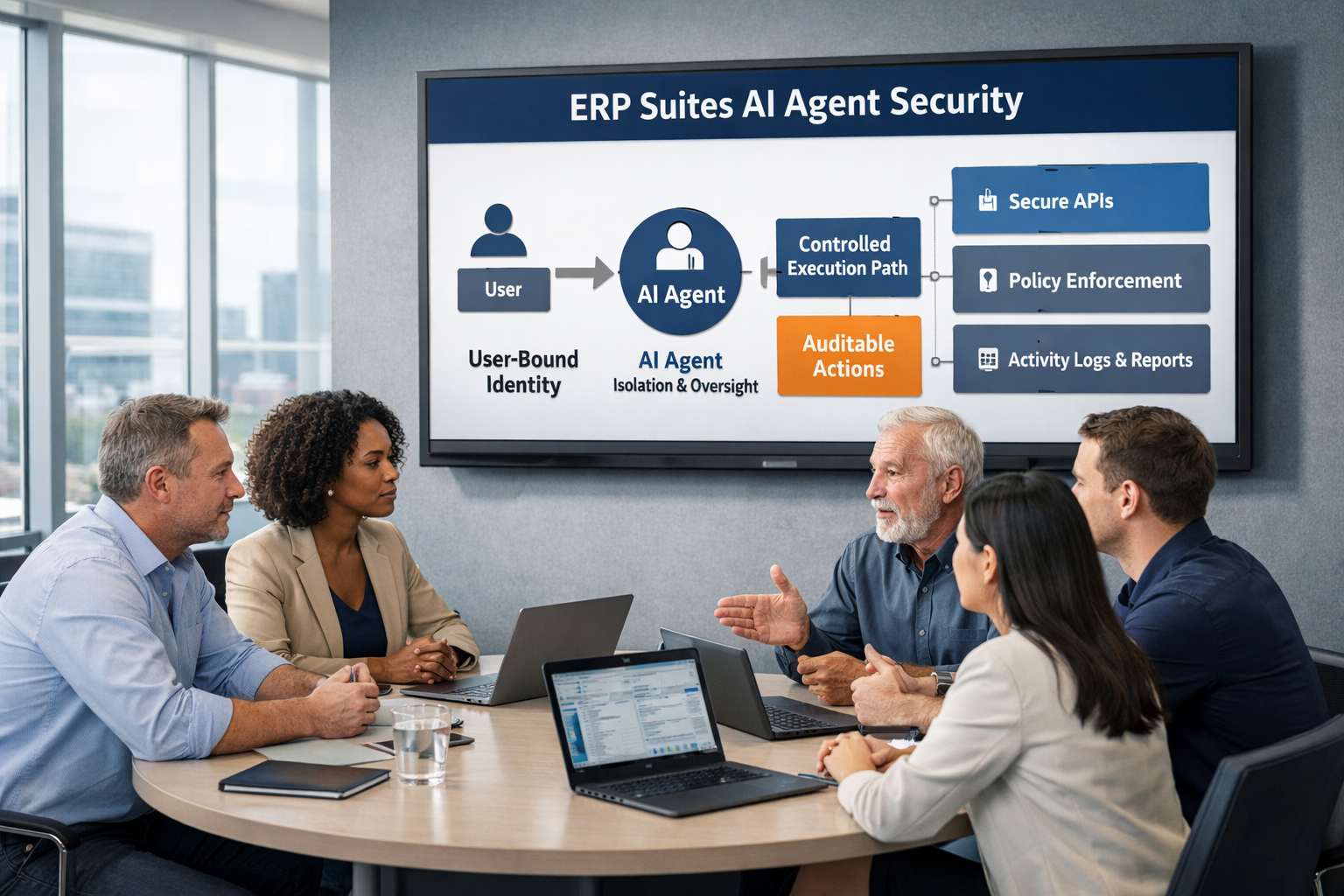
This becomes particularly important with AI agents. An agent designed to perform work can't do much within an enterprise if it has no way to interact with the systems involved in that work.
The question then becomes: How do you create those connections?
Why Building Enterprise AI Integrations from Scratch Takes Time
Every organization's technology environment is different.
Even businesses using the same ERP or CRM may have different configurations, customizations, security requirements, data, integrations, and business processes.
Starting from scratch can mean determining how AI will communicate with each system, building those connections, establishing authentication and permissions, mapping the appropriate data, and testing everything before the organization can focus on the process the AI is meant to improve.
That foundational work is necessary, but it can slow down the path from an AI idea to an AI solution that works within the business.
An accelerator is designed to shorten that path.
How Do AI Accelerators Simplify ERP and CRM Integration?
Consider an organization that wants an AI agent to help investigate customer order issues.
The agent may need customer information from CRM as well as order, inventory, fulfillment, or financial information from ERP.
Without an existing integration foundation, the organization first has to establish how AI will securely interact with those systems before it can fully develop the process.
The accelerator changes the starting point.
If those connections have already been developed, the organization can focus on adapting them to its environment and answering more business-specific questions:
- What information does the agent need?
- What should it be allowed to do?
- What should trigger an exception?
- When should an employee become involved?
- What security and approval rules need to apply?
The accelerator doesn't eliminate those decisions. It helps organizations get to them sooner.
And the benefit can extend beyond one AI use case. A reusable integration foundation can support additional AI initiatives without requiring teams to rebuild the same basic connections every time.
Where Does MCP Fit into Enterprise AI Integration?
One way these connections can be standardized is through Model Context Protocol (MCP).
MCP provides a common way for AI applications to connect with external tools, systems, and data. Instead of creating a completely different method for every AI-to-system interaction, MCP provides a more consistent way to make capabilities available to AI.
For enterprise organizations, that could mean giving an AI agent a controlled way to retrieve information or use approved functions from ERP, CRM, or another business system.
MCP and an AI accelerator aren't the same thing.
MCP helps provide the connection. An accelerator helps organizations avoid having to build that integration foundation from scratch.
What Still Needs to Be Customized with an AI Accelerator?
Accelerated doesn't mean plug-and-play.
Every organization still has its own processes, security requirements, business rules, and expectations for how much authority an AI should have.
One company may allow an agent to retrieve information but require a person to approve any action. Another may allow certain low-risk steps to happen automatically while escalating exceptions to an employee.
The integration also needs to reflect the organization's actual ERP and CRM environments.
That's why an accelerator should be viewed as a head start, not a finished implementation.
The foundational connections may already exist, but the final work is about making those connections fit the business: configuring access, applying security, defining processes, establishing appropriate human oversight, and testing the solution in the organization's environment.
Final Thoughts
Enterprise AI becomes more useful when it can work with the systems and processes that run the business. For many organizations, ERP and CRM integration will be an important part of making that possible.
Enterprise AI accelerators can provide a prebuilt foundation, while technologies such as MCP can create a standardized way for AI to interact with enterprise systems. Organizations can then focus on adapting those capabilities to their own data, security requirements, processes, and AI use cases.
ERP Suites is taking this accelerator-based approach to enterprise AI integration, helping organizations get a jump start on connecting AI with the systems they already use.

The goal is simple: spend less time building the integration foundation and more time putting AI to work for the business.
Topics: