
AI is quickly becoming part of everyday work. But as organizations explore how to use AI, the terminology can make it difficult to understand exactly what different AI tools can—and cannot—do.
Two terms you may hear are digital assistant and digital worker. While both use AI to help people work more efficiently, they play very different roles.
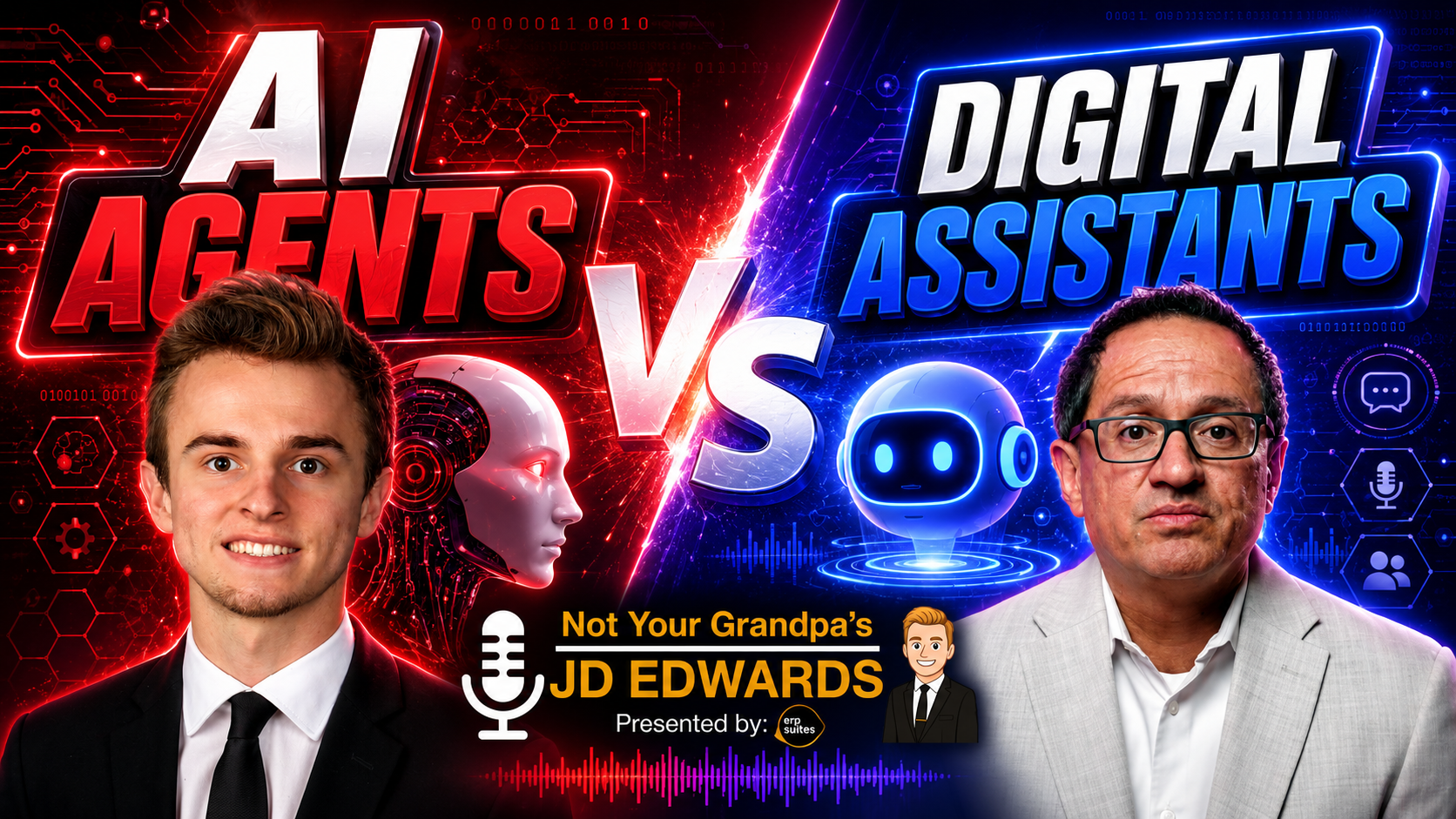
A digital assistant helps a person complete work. A digital worker, often powered by AI agents, can take on work more independently and carry a process through multiple steps toward a defined outcome.
Understanding that distinction is important when deciding where AI can provide the most value for your organization. In this article, we'll break down how digital assistants and digital workers differ, what each can do, how much human involvement they require, and when it makes sense to use one over the other.
What Is a Digital Assistant?
A digital assistant is an AI-powered tool designed to help a person complete a task more efficiently.
Think of it as a tool you work with. You provide a prompt, question, or instruction, and the assistant responds by helping you complete a specific piece of work.
For example, a digital assistant might:
- Summarize a long document
- Draft an email
- Answer a question about company information
- Analyze a set of data
- Generate ideas or recommendations
- Find and organize information
In most cases, humans remain responsible for driving the process. You decide what needs to be done, initiate the interaction, review the output, and determine what happens next.
That makes digital assistants particularly valuable for improving individual productivity. They can reduce the time employees spend researching, writing, analyzing, or searching for information while keeping the employee in control of the work.
What Is a Digital Worker?
A digital worker takes AI a step further. Rather than simply helping a person complete an individual task, a digital worker can be given a goal or responsibility and use AI agents to carry out multiple steps of a business process.
Instead of asking AI to help with each step, you're giving it work to accomplish.
The key difference is autonomy. A digital worker can make decisions, interact with business systems, and take approved actions across a workflow based on the rules, data, permissions, and goals it has been given.
That doesn't mean a digital worker operates without boundaries. It needs to be configured around your organization's systems, workflows, business rules, and permissions. Humans establish those guardrails and remain involved when approvals, exceptions, or judgment are required.
The result is a shift from AI that primarily assists people with work to AI that can take responsibility for completing defined work.
What’s the Difference Between a Digital Assistant and a Digital Worker?
While a digital assistant supports a person completing a task, a digital worker can take on more responsibility for executing the work itself.
Here’s how the two compare:
| Common Differences | Digital Assistant | Digital Worker |
| Autonomy | Responds to human requests and direction | Can independently work toward a defined goal |
| Scope of Work | Typically supports individual tasks | Can execute multi-step processes |
| Human Involvement | Human drives the work | Human sets goals, rules, and guardrails |
|
Ability to Act |
Primarily provides information or assistance | Can take approved actions on a user's behalf |
| Workflow Complexity | Best suited for individual or straightforward tasks | Can manage more complex workflows and exceptions |
| Integrations | May access information from connected systems | Can interact with multiple systems to complete work |
| Accountability | Human remains responsible for completing the task | Digital worker can own execution within its defined responsibilities, with human oversight |
Neither approach is automatically better. They solve different problems, and the right choice depends on what you're trying to accomplish.
What Can Digital Assistants and Digital Workers Actually Do?
The distinction becomes clearer when you look at how each might handle the same business process.
Consider an accounts payable team processing an incoming invoice.
With a digital assistant, an employee remains at the center of the process. They might ask the assistant to summarize invoice information, look up a purchase order, identify a discrepancy, or draft a message to a vendor.
A digital worker can take on more of the workflow. It could receive and extract invoice data, validate that information against business rules, compare the invoice against purchase order and receipt data, identify discrepancies, route approvals or exceptions, update the ERP, and notify the appropriate employees when human involvement is required.

The same distinction applies across other areas of the business:
- Sales: An assistant can research prospects and draft an email. A digital worker can qualify a lead, update the CRM, route the opportunity, and initiate approved follow-up steps.
- Customer service: An assistant can help an employee find information and draft a response. A digital worker can gather relevant account information, resolve approved requests, update systems, and escalate cases that require human attention.
- Marketing: An assistant can help generate content or analyze campaign results. A digital worker can coordinate defined steps in a campaign workflow, move information between systems, trigger approved actions, and flag issues that require review.
This ability to work across connected systems is an important part of what makes a digital worker different. Rather than replacing the applications your employees already use, a digital worker uses AI Agents to interact with those systems to help carry out a process from one step to the next.
How Much Human Involvement Does Each Require?
Both digital assistants and digital workers require human involvement, but that involvement happens in different ways.
With a digital assistant, the human is typically in the loop. An employee initiates the request, evaluates the response, and decides what action to take next.
With a digital worker, the human can be more on the loop. People establish the goals, business rules, permissions, and guardrails, while the digital worker executes approved tasks, and humans monitor performance or step in when necessary.
Human involvement may still be required when:
- An exception falls outside established rules
- A decision requires judgment or additional context
- An action carries significant financial, legal, or business consequences
- An approval is required
- The digital worker encounters information it cannot confidently interpret
The appropriate level of oversight depends on the process and its risk. Some routine work can be completed with minimal intervention, while other processes may require human approval at specific points.
The goal isn't necessarily to remove people from a process. It's to determine where human involvement provides value and where AI can safely take on the work.
What Are the Risks and Limitations of Digital Workers and Digital Assistants?
Digital assistants and digital workers can improve productivity and automate work, but neither should be treated as infallible.
AI can misunderstand information, produce inaccurate responses, or generate information that appears credible but is incorrect or unsupported.
For a digital assistant, the risk can be easier to contain because a person is usually reviewing the output before acting. With a digital worker, the stakes can be higher because the AI Agents may be authorized to take actions across business systems.
That makes several considerations especially important:
- Permissions: AI should only have access to the systems, data, and actions necessary for its responsibilities.
- Security: Sensitive business and customer information needs to remain protected.
- Data quality: Incomplete, outdated, or inconsistent data can lead to poor results.
- Integrations: Digital workers depend on reliable connections to the systems involved in a process.
- Governance: Organizations need rules around what AI can do, what requires approval, and how actions are monitored.
- Oversight: AI performance should be reviewed over time to ensure it continues to produce the intended results.
Greater autonomy also isn't appropriate for every situation. Decisions involving legal obligations, significant financial commitments, safety, or nuanced human judgment may need to remain under direct human control.
It's also important to remember that implementing a digital worker isn't the finish line. Business processes, data, rules, and organizational needs change over time. Digital workers need to be monitored and optimized along with those changes to continue delivering value.
The more autonomy you give AI, the more important its guardrails and ongoing oversight become.
When Is a Digital Assistant Enough?
Not every business process needs a digital worker.
A digital assistant makes sense when the goal is to help people work faster or make their jobs easier, rather than have AI take responsibility for an entire process.
You may only need a digital assistant when:
- Employees need faster access to information
- A task requires significant human judgment
- Employees need help drafting, researching, summarizing, or analyzing
- The work changes frequently and is difficult to standardize
- A person needs to review or approve nearly every output
- There is little value in automating the surrounding process
For example, if employees spend significant time searching for company documentation for answers, an assistant that can quickly find and summarize the right information could deliver meaningful value without needing to take additional actions.
The question to ask isn't, "How much can we automate?" It's, "What problem are we trying to solve?"
When Should You Consider a Digital Worker?
A digital worker becomes more valuable when the challenge isn't a single task, but the time and effort required to move work through an entire process is important.
Common signs that a process may be a good fit fo a digital worker or AI Agent include:
- Repetitive, multi-step work: Employees repeatedly follow the same process.
- High labor requirements: Routine work consumes significant employee time.
- Frequent handoffs: Work regularly moves between people, departments, or systems.
- Process bottlenecks: High volumes of routine work slowdown the process.
- Multiple systems: Employees repeatedly move information between applications.
- Around-the-clock needs: Work would benefit from being processed beyond normal business hours.
- Scalability challenges: Increasing volume requires adding more people just to keep up.
Rather than making each individual task slightly faster, a digital worker can address the larger process and involve employees when their judgment or approval is actually needed.
What ROI Should You Expect from a Digital Worker vs. a Digital Assistant?
There isn't a universal ROI for either approach. The value depends on the problem you're solving, and the results AI produces.
For digital assistants, ROI is often measured through individual productivity gains. If employees can find information, analyze data, or complete routine tasks faster, the value comes from the time saved and how that additional capacity is used.
For digital workers, organizations can look at the impact across an entire process.
Consider:
- Time saved: How many employee hours are currently spent on the work?
- Labor capacity created: Can employees redirect time toward higher-value activities?
- Cycle-time reduction: Can work move from beginning to end faster?
- Error reduction: Can greater consistency reduce mistakes and rework?
- Increased throughput: Can you handle more work with the same resources?
- Revenue impact: Could faster processes or increased capacity contribute to revenue?
- Implementation and oversight costs: What will it cost to implement, integrate, maintain, govern, and improve the AI?
Establishing a baseline before implementation is important. Without knowing how a process performs today, it's difficult to measure whether AI actually improved it.
ROI shouldn't be measured by how much AI your organization uses. It should be measured by whether AI meaningfully improves the business outcome you're trying to achieve.
Final Thoughts: Do You Need an Assistant or a Digital Worker?
The decision ultimately comes back to what you're trying to accomplish.
Do you want AI to help your employees do the work? A digital assistant may be enough.
Do you want AI to take on more of the work itself? Consider a digital worker.
Neither is automatically better. The right choice depends on the work, the level of autonomy it requires, and the business outcome you're trying to achieve.
At ERP Suites, we help organizations identify where AI can provide the most value, whether that means giving employees better tools to support their work or implementing AI agents that can take on larger portions of a business process. The goal isn't to use AI everywhere. It's to find the right opportunities to improve how work gets done and create measurable value for your business.
Topics: