
Oracle has announced plans to introduce a Model Context Protocol (MCP) server for JD Edwards EnterpriseOne as part of Release 27, although the planned capabilities and timing remain subject to change. This planned capability could make it easier for organizations to connect AI applications, from assistants like ChatGPT, Claude and Microsoft Copilot to purpose-built AI agents, to their JD Edwards environment.
Today, connecting AI tools to enterprise systems often requires custom integration work. MCP introduces a standardized way for compatible AI applications to access business data and processes, potentially reducing the effort required to establish those connections.
For JD Edwards customers, this could create new opportunities to access existing ERP capabilities through a wider range of AI applications. But how will MCP work with JD Edwards, what will it allow users to do, and what should organizations know before Release 27 arrives?
What Is Model Context Protocol (MCP)?
Model Context Protocol (MCP) is an open standard that allows AI applications to connect with external systems, access information, and interact with business processes.
Think of MCP as a universal plug. Just as a USB connection allows different devices to communicate without requiring a unique connection for each one, MCP provides a standardized way for AI applications to interact with the systems and data they need.
Without a common standard, connecting different AI applications to enterprise systems can require separate integrations, each with its own configuration and maintenance requirements. MCP helps simplify this process by providing a consistent way for compatible applications to discover and use available tools.
MCP is the plug, not the appliance. It establishes the connection, while the AI application determines how to use the information and capabilities made available through it.
Why Is Oracle Bringing MCP to JD Edwards?
Oracle's introduction of MCP to JD Edwards is part of a broader effort to make JD Edwards more accessible to emerging AI technologies while allowing organizations to build on their existing ERP investments.
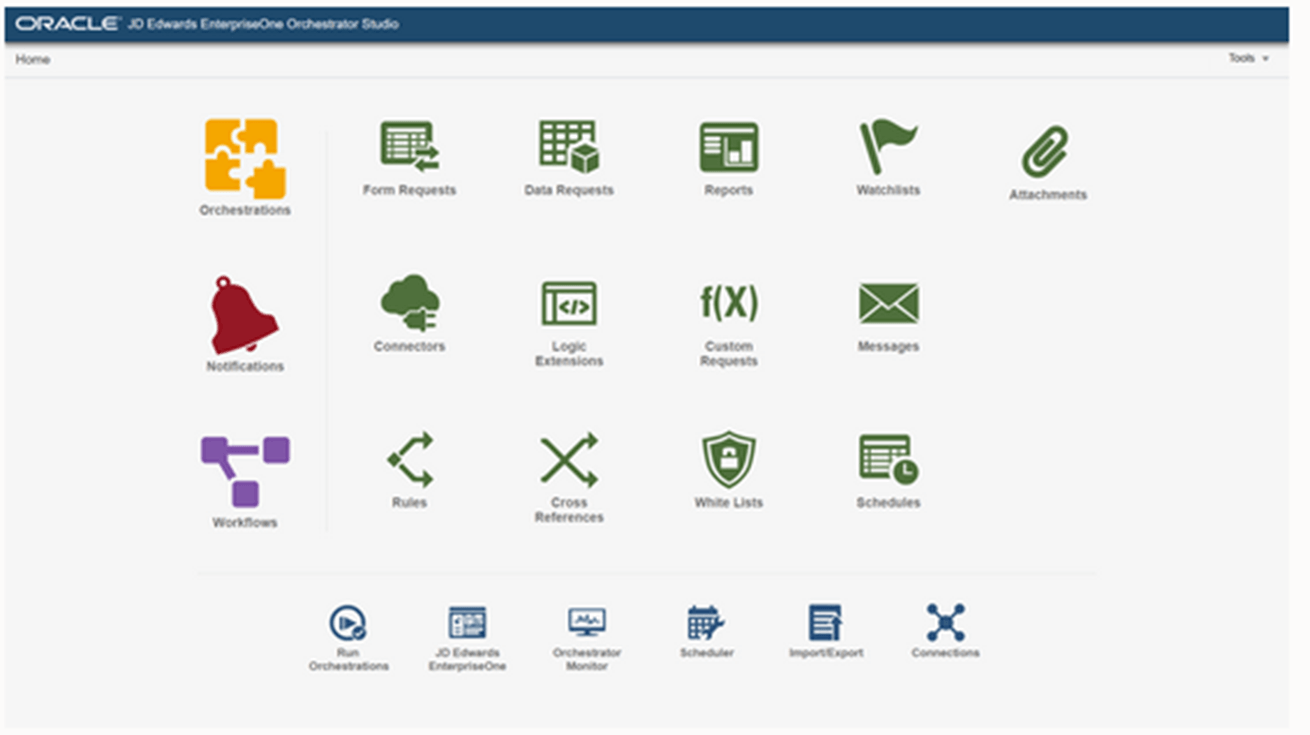
JD Edwards already provides tools like Orchestrator that allow businesses to automate processes, retrieve information, and connect with external applications. However, integrating AI applications with these capabilities can require additional development and configuration.
By introducing an MCP server, Oracle aims to simplify how compatible AI applications connect with JD Edwards. This could allow organizations to make ERP data and existing business processes accessible to a wider range of AI tools without developing a separate custom integration for each one.
This also aligns with Oracle’s broader AI strategy, including its investments in AI Agent Studio for Fusion Applications. For organizations using both JD Edwards and Fusion, standardized connections could create additional opportunities to explore AI capabilities across their enterprise systems.
How Will MCP Work with JD Edwards?
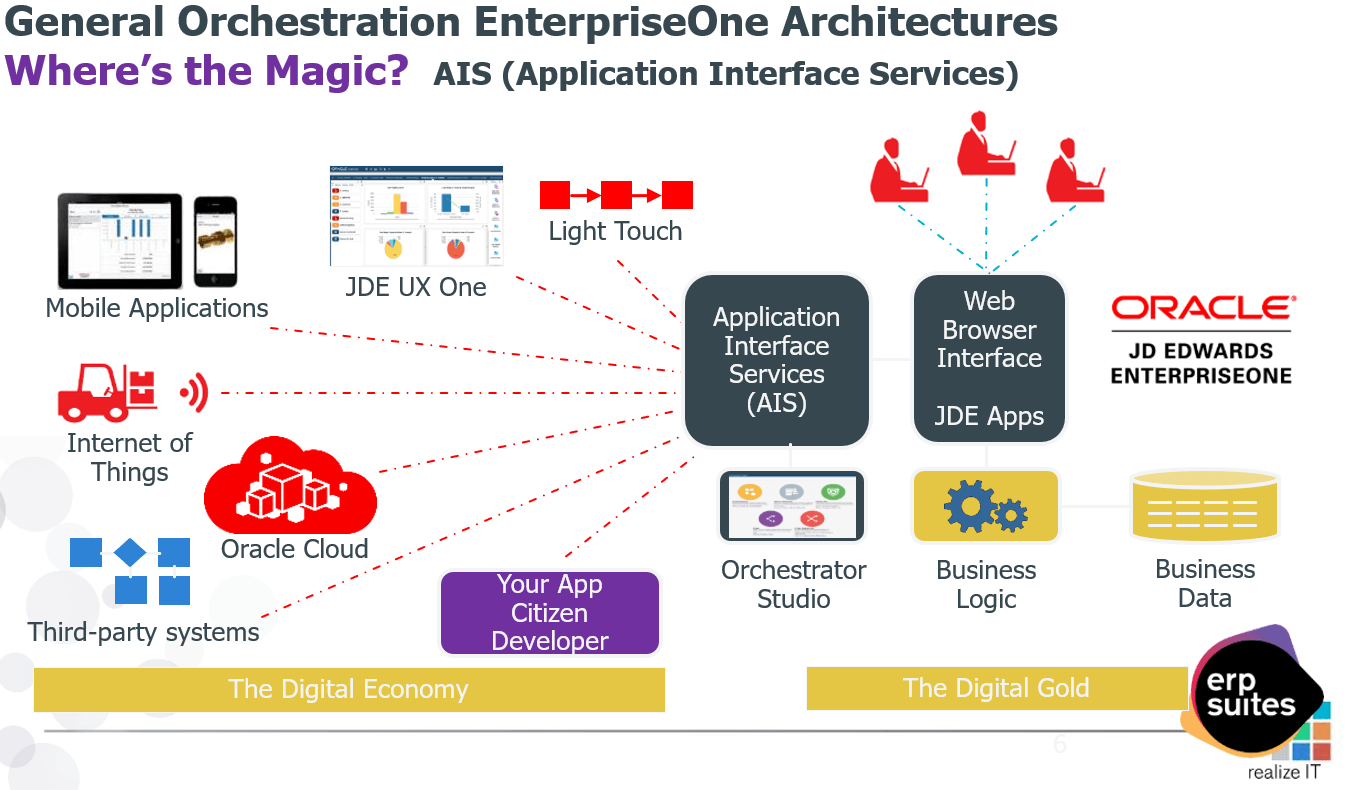
Oracle’s planned MCP server will build on existing JD Edwards technologies, particularly Application Interface Services (AIS) and Orchestrator, to provide a standardized connection between JD Edwards and compatible AI applications.
AIS allows external applications to communicate with JD Edwards, while Orchestrator enables organizations to retrieve information, automate business processes, and perform actions within the ERP system. The MCP server will make supported capabilities available as tools that AI applications can discover and use.
For organizations already using Orchestrator, existing orchestrations could become accessible to AI applications through MCP, potentially reducing the need to develop new integrations for processes they’ve already automated.
For example, an employee could potentially ask an AI assistant like ChatGPT or Claude which purchase orders from a particular vendor are overdue and receive information retrieved from JD Edwards, provided the necessary tools and permissions are configured.
Oracle is also planning MCP capabilities for JD Edwards Server Manager, which could allow administrators to use compatible AI applications to check system status, review sessions, and retrieve information about managed instances. This extends MCP’s potential benefits beyond business processes to the teams responsible for maintaining the ERP environment.
What Should JD Edwards Customers Do to Prepare for MCP?
Although Oracle's MCP server is planned for Release 27, organizations can begin evaluating their existing JD Edwards environment to understand what may be needed to support the new capabilities.
There are a few areas worth evaluating:
- Tools Release: Review your current Tools Release and understand the upgrade path to Release 27 as Oracle confirms MCP requirements.
- AIS and Orchestrator: Evaluate your existing configurations and orchestrations to understand which capabilities could eventually be made accessible through MCP.
- AI application compatibility: Identify which AI applications your organization currently uses or permits, and whether they support MCP connections.
- Security and access controls: Review how AI applications will authenticate with JD Edwards, which tools they can access, and how existing user permissions will be enforced through MCP connections.
Organizations may also want to evaluate whether Oracle’s planned MCP capabilities meet their needs or whether existing third-party MCP solutions are worth considering. Availability, compatibility, security, and ongoing support should all factor into that decision.
As Oracle releases additional information about MCP requirements and availability, reviewing these areas now can help organizations make more informed decisions about adoption.
Final Thoughts
Oracle’s planned MCP server could make it easier for organizations to connect a wide range of AI applications to JD Edwards, building on the data, processes, and automation capabilities they already have in place.
While AI assistants can help users retrieve information and answer questions, AI agents can take on more complex responsibilities within business processes. MCP can support connections for both, but developing AI agents requires additional planning, configuration, and oversight.

At ERP Suites, we help organizations modernize their JD Edwards environments, expand automation capabilities, and explore how emerging technologies like AI can support their business goals.