
AI Agents for JD Edwards: Who Owns the Digital Worker?
September 28th, 2026
27 min read
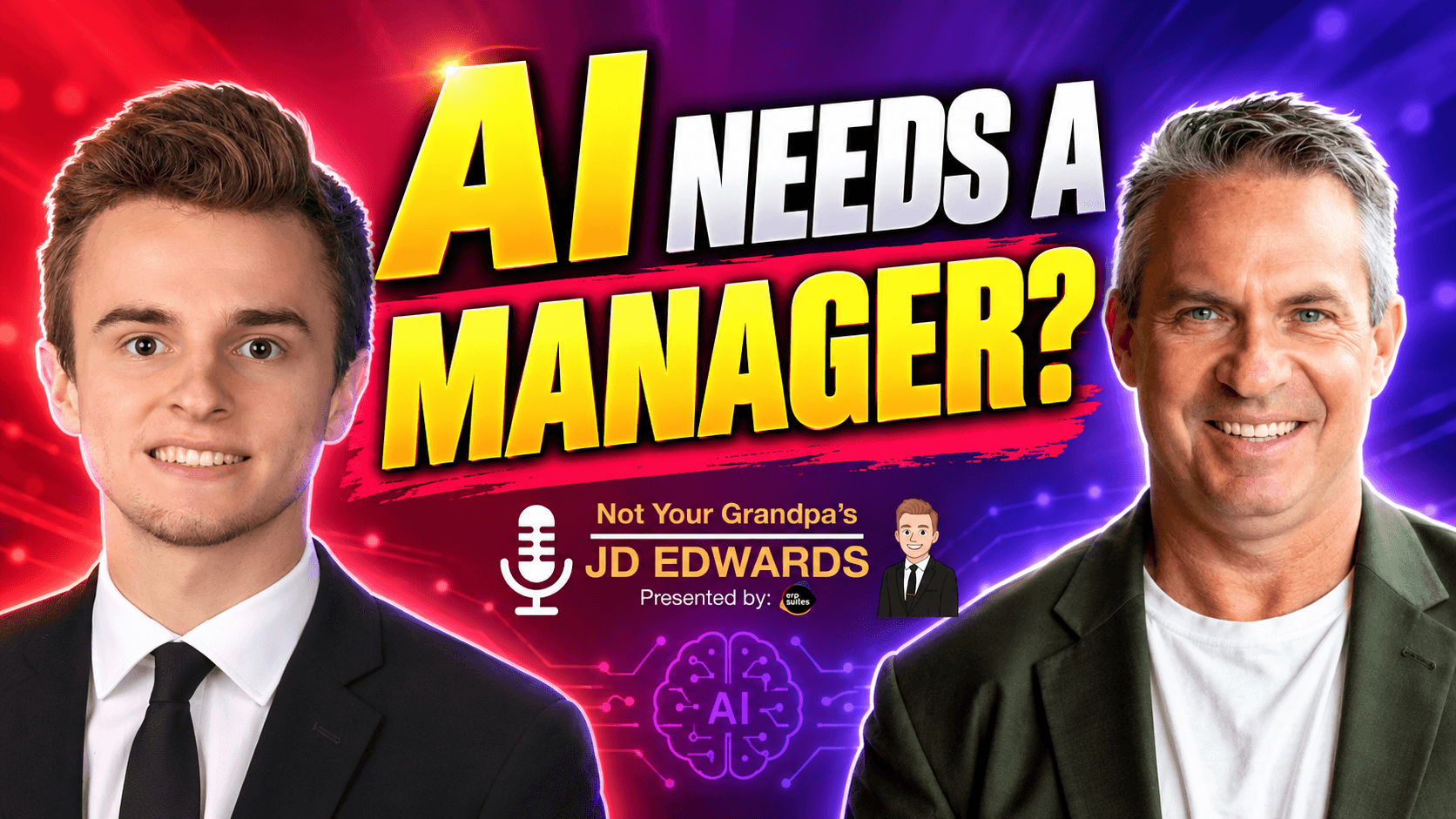
This episode explores how AI agents are evolving from software tools into digital workers that operate across business processes, systems, and applications. Kevin Van Horn discusses what this shift means for organizations, including how to approach ownership, security, permissions, autonomy, governance, and accountability as digital workers become part of the enterprise workforce.
Table of Contents
- Rethinking AI Agents as Digital Workers
- Organizing Digital Workers Around Business Processes, Not Applications
- What Digital Workers Mean for the Workforce
- Security, Identity, and Permissions for Digital Workers
- Deciding How Much Autonomy to Give AI
- Logging, Auditability, and Learning from Mistakes
- Building a Governance Model for Digital Workers
- Who Owns the Digital Worker?
Rethinking AI Agents as Digital Workers
Introduction: Why AI Agent ROI Matters in JD EdwardsWhat happens when your next employee isn't a person and doesn't work inside just one application? If an AI agent works across JD Edwards CRM, e-mail, spreadsheets and documents, who actually owns it?
Today, we're looking at AI agents as digital workers performing business processes across the enterprise. By the end, you'll have a clearer framework for deciding what they should do, how they should be secured, who should own them, and how to govern them.
Welcome back to Not Your Grandpa's JD Edwards. I'm your host, Nate Bushfield. Now, most companies still think about AI in terms of applications of JD agent to CRM agents and an e-mail assistant. But people don't work that way.
Someone in accounts receivable might use JD Edwards CRM, e-mail, documents, and even spreadsheets just to complete one singular process. So if an AI agent starts doing that work, does it really belong to 1 application or does it belong to the business process? And if we're creating digital workers that operate across the enterprise, who really owns them? What are they allowed to do? How do we secure them and how do we keep that environment under control as it grows?
Joining me today is Kevin Van Horn, managing director of AI Advisory at ERP Suites, to help us unpack this. Kevin, how are you doing today? And for the viewers at home that maybe haven't seen you before, can you give a little background?
Sure. Yeah. Hey, it was great to have me back. I appreciate it. Nate, it was good to see you. Yeah, it's, this will be my third one, my third podcast, so I'm excited about it. But yeah, I'm going a little bit more casual today, end of the summer. We're having a great day up here in New Hampshire.
So, yeah, my background is I, I was presenting to a user group the other day and, and this is my 36th year being involved in JD Edwards and JD Edwards related stuff, right. So started as a customer in 1990. But you know, you know, and I went along to, you know, through the Oracle acquisition, led the the JD Edwards solution consulting organization for 10 plus years and, you know, have a background more on the project side of the business.
And, and I'm just been thrilled to be part of the ERP suites family for the last, you know, six or seven months now and love doing the podcast. So I can't wait to chat about the subject. It's near and dear to my heart.
Yeah. And of course, we enjoy having you on because you really are the forefront of a lot of this AI talk that we have in this industry and across AI agents and digital workers throughout this space and throughout the entirety of what AI truly is today.
Now, it's always funny when someone says that to me because, you know, I'm sitting here, right, 26 years old, about to be 27 at the end of the month, though. So now I can't really set up for too long.
Happy birthday.
Happy birthday.
Yeah, I appreciate it. I appreciate it. But it really does put things into perspective as somebody who kind of grew up with technology at his fingertips. And AI really isn't that scary to me just because it's that next step of technology evolution.
And when we're talking about that technology evolution, like should companies really think about AI agents as software tools where it has been in the past, like with digital assistants or more as digital workers performing business processes?
Yeah, Yeah, that's a, that's a great question too. And it's a, it really kind of drives down to the heart of this whole question, right. And if, if I think about it, if I sit back and think about it, you know, the, the honest answer is probably neither is, is perfectly right. You know what I mean?
You know, 'cause whatever you label the IT as kind of determines everything after you know what I mean, then that that's the that's the problem, right? If you think of these AI agents as a software, a piece of a code, a piece, a, a, a tool, the way you buy it and then use it is you follow that traditional software evaluation pair.
You know the process, right? Does it have the features you want? What's the license? Does it work great? And then kind of you stop, right? Because that's what software is supposed to do, right? It's supposed to have a beginning and an end. And you know everything that happens in between, right?
You feel comfortable and confident that when you put in an AP invoice into JD Edwards, it's going to create a 411 record and you know it's going to go into this stat. You know, you know the process, right?
If you call it a digital worker, then you have to really answer a different set of questions, right? You know, you got to answer like, OK, it's a digital worker. What's its job description, right? You know, like, like, I mean, you wouldn't hire a human worker, right, for a job without a job description, right?
You know, so it's like, so you know, let's call it a digital worker then. So what's the job? What do you, what is it trying to accomplish, right? Who's the manager, right? Like you don't wouldn't hire somebody just being like, Oh yeah, you're, you're on your own, you're out there, right? You report to no one, right? That kind of thing, right.
And then, you know, the last question is what is it allowed to do, right? You know, what kind of decisions is it allowed to make, right? So, so going back to your question, right, which was the important one and the good one? It's like, you know, how would I answer that question?
I, I think then digital worker is the more useful way to look at these AI agents, right? Not because not, you know, no one's pretending that a digital worker is a person, right? I mean, but that's, that's why we call it a digital worker, right? You know, that's why we call that.
But because those questions that it forces you to answer, right, are the ones that actually matter and the ones that will actually ensure success and or failure, if you know what I mean, like if you don't answer them correctly.
So it's like, you know, because you know, quite frankly, if you, if you think of it as a tool, then then you're thinking about an agent, a very narrow view, right? And, and you're probably just going to have an an agent that's kind of expensive that just does what the ERP applications already do, right.
When you think of it as a digital worker and think of it as a job with a person that manages it with autonomy to perform actions, then you really start at answering or asking the right questions. Is that fair?
Yeah, exactly it. It's kind of like I, I don't know if you caught the Apple event and they were talking about their new Airpods, their new devices, everything that's coming out. And the Airpods one are, is the main one that really stuck out to me because I've always used it as a way to talk to people or a way to listen to music, listen to podcasts, listen to audio books, that type of stuff, right?
There are features that are within the Airpods that turn it from, all right, this is a very expensive listening device to, oh, I can actually translate a conversation through my Airpods and it will tell me in English what this person is saying.
She's amazing, right?
It's incredible. And it's that same idea of I put these things into that specific box, into that specific application, think that it can only do this one thing. Well, that's not the case at all. It just depends on your perspective, right? So really should, right, sorry, go ahead.
Well, no, no, as you were looking at the Airpods as a tool, right? You know, you weren't looking at your Airpods as your communication worker, right? For you, right? I mean, you did, you never thought in a million years that your Airpods were actually an interpreter for you, right?
And even if you got into that situation where somebody was trying to communicate with you in a different language, you probably wouldn't even have thought about it, right? And, and like, oh, my, my, my Airpods can do that, right? I can, I can understand this person.
So now hopefully going forward, you'll reframe how you think about your Airpods, right? And think about the what job is it trying to do for me? That's what we're saying here.
Yeah, agreed on.
Organizing Digital Workers Around Business Processes, Not Applications
So should companies still organize Asians digital workers around an application or should it be around an entire business process?
Oh, wow. Yeah. I mean, yeah, not an application. It's not an application at all, right?
You know, and, and it's interesting because we'd like, you know, even us at ERP suites, we like to say, hey, we're building agents for JD Edwards, right? Well, part, part of that's true, right? I mean, we're, we're building agents for companies in the JD Edwards ecosystem, right? We're, we're not, we're not building, you know, necessarily building agents for JD Edwards.
All right, so, and I'll even take that further, right. You know, you, you organize an agent around an application. And this is kind of what we were just talking about, particularly around your Airpods. I mean, you create that exact silo of what that application does and what people have been complaining about for the as long as they've used that application.
It doesn't do this or I've got to do this from this Excel spreadsheet, or I get this invoice in and I've got to manually type it in, right? So if you build it around an application, you're just, you're framing it to what that application does, right?
You know, think about, you know, you know, think, think about an AR clerk in an organization, you know, and to and to work on, say a past due invoice, they've got to go to JD Edwards, right? And they look at an, an AR aging report, right? And try to, oh, this is this one's the problem, right?
And then they go to CRM and try to figure out, well, who's the owner and kind of what was the, what caused this? You know what I mean? And then, and then they do some type of e-mail communication or phone calls of, Hey, how do we fix this problem, right?
You know, And then she goes in or he or she goes into SharePoint to try to find, you know, AAPO or, you know, a proof of delivery and, and then she jumps into a spreadsheet to update something, Right.
Well, that's the process, right? You know what I mean? JD Edwards was only the first little thing they did right there, right? They, they went in and looked at an aging report, but then they went to CRM, they went to spreadsheets, they went to documents, they did emails. They did all that, right?
JD Edwards is one piece of it, right? An important piece, but it's one piece, right? Yeah, it's kind of the easiest piece, right, You know what I mean? And and not trying to be a, you know, flip about it, but it's kind of the piece that's in there kind of works.
But the hard part is, you know how how do you get all that data and information and how does it interact and how do you make good decisions based upon that data, right.
So, so trying to build an agent around AJ Theatre's application is, is, is trying to build an agent around something that you know, the easy part of the process, right, not necessarily the challenge in part of the process.
And then you don't necessarily get the return, right. You know, it, It's fine if you're trying to do something like a digital assistant where you say, what's the status of this order or, or you know, what's the account balance of this? And it just comes back and gives you a figure, right?
You know, really the value is how does that agent work and support that process, right? To make it more effective, more efficient, less manual, more accurate, you know, less error prone, all those things, right?
So it's these agents are incredible because they work in that area around JD Edwards to help make decisions, but also can then just go right into JD Edwards itself and make those updates that you want it to and, you know, eliminate a lot of that manual process.
So do you think that it's maybe like in a naming convention here, like if I were to roll out an agent and call it a GDE agent, obviously I'm going to think that it's only working in Shady Edwards. But if I but if I were to call it like an accounts receivable agent that happens to use JD Edwards, would that be a better way to really look at the digital workforce here?
Oh yeah, IA 100% right. I mean it, it's the way I refer to our, you know our agents. I've and you know me, I don't even call them agents, I call them digital workers, right?
But it's always around this is our financial digital workers or this is our home building digital workers or this is our distribution workers right there. We have AP digital workers, we have reconciliation digital workers. You know, we have all of those, right? Not JD Edwards, right?
These agents happen to, can happen to use JD Edwards. They understand JD Edwards, right? They're knowledgeable about JD Edwards, but there's not, they're not JD Edwards agents. They're and you know, that's important for what we just said.
JD Edwards is just part of the process, right? They're trying to manage the process, right.
So, you know, let's say you know that that digital workers job today is is doing collection calls or what not AJD Edwards only agent can just tell you what invoices are 60 days past due.
Yeah, yeah, sure.
Which which is not bad stuff, right? You know, but it doesn't tell you if the customer disputed the invoices 3 weeks ago and the CRM system says they're in a renewal process as well.
And, and then, you know, the, the, the documents over in, in your SharePoint say that proof of delivery settles that dispute, that they didn't get it. You know what I mean?
The, the JD Edwards agent puts the, puts the customer to the top of the call list and AR agent looks at all the possible data sources to help that person make the best decisions, right?
So you know, your company already has the data. It's the workers are trying to organize and to rally and to kind of combine that information to make make decisions, right?
And that's what ours is doing, right? We just happened to work with companies that have JD Edwards, you know, as their ERP system, right. But these agents work in around outside of JD Edwards just as naturally as they do with it.
So absolutely we shouldn't be calling them JD Edwards agents anything. They're the process that they're trying to solve for. Episode 45 - Kevin Van Horn_1-e…
What Digital Workers Mean for the Workforce
Yeah. So that's, it's a perfect Segway into where I'm kind of going with this. Like what changes when executives start thinking about agents as digital workers are part of their workforce compared to maybe how they're thinking about them today?
Yeah, I mean, it's, it's important, right? I mean, it's, it's, you know, if I'm thinking about that, I'm thinking about 3 different things, right? And, and one of them could be, one of them could be uncomfortable, actually two of them could be uncomfortable.
But the first thing that I'm that I would think about is, is that capacity and headcount are two different things, right? And it's something that we've been trying to have as part of our dialogue with our with our great customers as well as that, you know, when you first look at it, the agents can just do amazing things to help give organizations back time, right, which is capacity, right?
It's labor capacity, right? It's throughput, you know, it's you know, but it's not necessarily that's up to you as an organization. What you do with that capacity, right? How you allocate that that capacity. How do you change organizational roles now that you have digital workers as part of your organization, right?
So you know, so that's important, right? It it's like, you know, you don't have to, you know, this isn't about jobs and job racks, you know that, you know, so it's, it's just a question of what do you want to do with that new capacity that you're OK.
2nd is that because of the way that these workers tie into your organization, you really have, you really have to name an owner for something that you don't necessarily have an owner for today, right? You know what I mean?
You know, going back to that our very first point around, you know, why digital workers instead of tools, right? Because you know, what's the job? Who manages it? You know, what do you allow them to do?
Well, we all. Understand that, you know, when we hire somebody, there's an organizational chart and they flow up, right? And there's only one person that doesn't have a manager, and that's the person at the top, right?
But otherwise, everybody kind of has, and I don't want to say it the weird way, but everyone has an owner, right? Everyone has a boss, everyone has a manager, right? That's kind of ultimately responsible down the line, right?
But but that's for people boxes. That's where rolls, right? We now have to name an owner for a process, right, where that's not something we necessarily did before. It was always this, it was always just a group of people trying to work together, right to to solve a problem.
Now we've got to name the owner of that so they can actually start helping that digital worker coordinate that. And you know, ultimately look at how the company is performing that process. Not a specific role, right?
And third one is, is this one might be, this is the one I thought was uncomfortable, but then I realized that the labour 1 is, is certainly kind of that a different kind of conversation to have.
But the the third thing to think about is governance, right, is how much, how much are you going to allow the how much autonomy you're going to you allow these digital workers? How much are you going to delegate to them? Right?
You know, you know, you know, everybody asks the same question, You know, what can AI do for us, right? How can it help us? Right, you know, you know, kind kind of the better question, you know, like if, if the, if my chair was differently and I was on the other side of it talking to me, it'd be like, you know, what am I willing to what am I willing to allow AI to be accountable for, right, Versus, you know, you could because now it's a person, right, you know, and, and, and that's why you have managers, right, because, you know, ultimately somebody's accountable for doing something and the manager above that, and they're accountable for everything those people do.
And and it moves on up the food chain, food chain that way. But now when we're looking at this, it's all you, you have to have that thought and that, that process of what am I going to let them do? Right?
And you know, we work with you on this as well. And we realize that, you know, on day one, you know, these don't have to be fully autonomous digital workers that are doing things without human intervention. And you wake up in the morning and all this stuff's done and you don't know how, right?
I mean, clearly we have all the account of the audit trails and the observability of everything that the agents are doing. But it's more important of how do how do you want that governance to happen? And it will change over time, right?
I mean, as you start seeing how these agents are executing your thoughts around what am I, you know, what's, you know, my capacity for letting the digital worker do something autonomously will change, right?
Because you see that it just processed 10,000 invoices and anything that over had a 95% confidence score from them was perfect to begin with. Well, you know what, maybe, maybe we don't need to have that, you know, level of governments and let them do that work.
My, my dream is that someday digital workers will be part of the org chart and this and maybe someday the org charts going to look differently, right? It won't be an org chart that has these structured roles. Maybe it's an org chart around are the critical business processes a company needs to execute to be successful.
But they should be there. But they should be there, right?
Yeah. And I think that's a very interesting goal to have of the next step of this digital worker evolution is to put them into the spots where they make sense in the org chart.
Because yeah, if we start looking at them as part of the workforce and we start giving them a specific roles, then it really will open up how the idea of AI agents can shift to that idea of digital workers.
But if we stop thinking about that agent as belonging to 1 application and start thinking about it as performing part of a business process, I think that shift will come.
Security, Identity, and Permissions for Digital Workers
4. Security, Identity, and Permissions for Digital Workers
But you're right, it also raises that important question of how are we going to make sure this is secure? Should we trust this? What should that really look like?
So if an AI agent can access enterprise systems and really take action, how do you govern? How do you make sure that it's secure and what it is allowed to do?
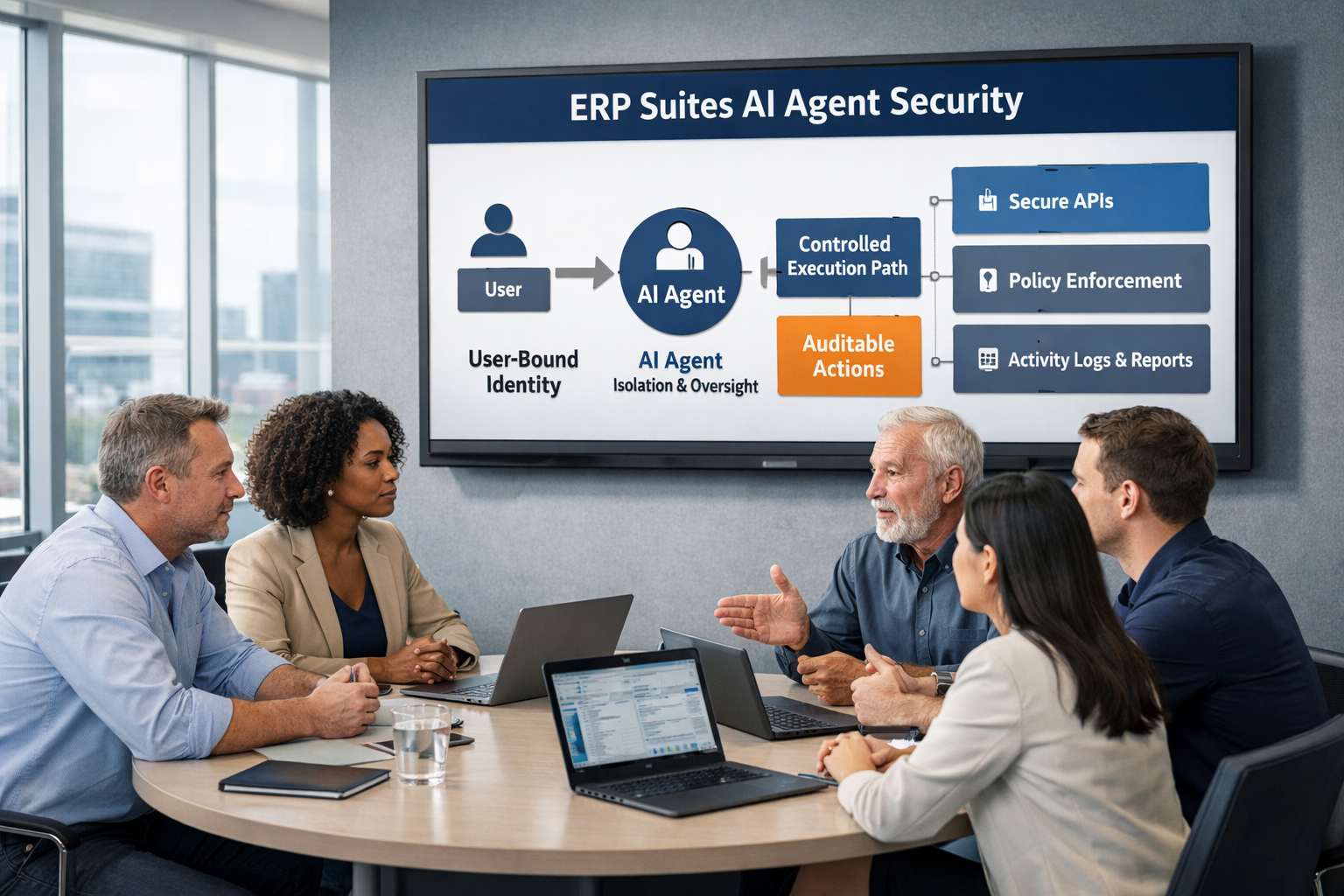
Yeah, Yeah, I like to think about it as you start treating the digital worker as a privileged identity, right? Not a feature of an an application or a tool, right.
The digital worker, you know, and the great thing about our AIG agents is that, you know, and, and why it's so quick to value is that because of our relationship with JD Edwards and because, you know, our understanding with that, you know, our agents can assume those security identities that within JD Edwards and you know, it can do that.
So if you think about it, an age in itself, right, It has credentials.
Yeah, it does.
I mean, an agent will have a credential, right? It's it the JD Edwards knows when an agent logs into it?
No, it knows when it updates it and knows just like it knows that you and I did it, right?
It has permissions. We allow it to do certain things. Can it add? Can it change? Can it edit? Can it update? Can it do all those things? It has credentials, right?
And because of the credentials and the permissions, it can take actions, right? So those things together, that's, that's an identity, right? You know what I mean?
That's, that's not a a tool, that's not an application, right? You know, that's, that's, that's a digital worker, right? Credentials, permissions and actions, right?
So, you know, then you turn this conversation back and and you know, and it's really important, right? I mean, so I'm not trying to minimize it at all, right?
The governance around AI with an organization's has to be, you know, a a sea level conversation that all companies are having, right? And, and I'm seeing it everyday.
I mean, we're talking to, you know, sea levels, we're talking to board of directors and they're all, you know, wanting to have this conversation, right?
But so if you if you take them a step back and it's typically kind of this the the CIOCTO organization that's really kind of responsible around that kind of governance model, right?
You start thinking about those actions, right? You know what I mean that I said before, I mean, you know, they understand credentialization, right? They understand permission sets, it's all this.
But what do you want them to do? So think about the that those actions, right? And think about it kind of in four different ways, right?
They can, what could an agent do? It could read something, helps it learn, could then recommend something, it could approve something or it could execute something, right?
Those are kind of the actions that an agent can perform, right? And you know, even within a singular process, the tasks within that process could be different. You know what I mean?
It's like, you know, you could have something along a process where you say, you know, for instance, if we're do talking about our AP agent, you might give the the agent the autonomy to execute a two way match on an invoice against the PO, right?
Why not?
But you might not, you might not give it the approval to go out and update the JD Edwards 411 tables, right? You might want that human in the Lube at that point, right?
So that that's that's kind of a a that that stops at the execution and brings it back to the approval, right? So it stages things for approval.
So even within the same process, it's not like it's not like about anyone singular process has to follow that. It's even just the individual task within the process, right?
You know, So you know, a well designed agent usually looks at a lot of different data, right? You know what I mean? It's a lot of different areas in there, right?
Lots of systems to recommend from, you know, and you know, then it usually gets to a point where it executes to one specific space or one specific place, right?
You know, and that's, you know, we're all used to those flow charts of a business process. That's usually the one at the very end, right? You know, so you know, the so that's kind of how it works.
And I guess, you know, if you boil it all down to one thing, right? And, and, and say the one thing you know out loud is that the goal of any one of these digital workers is not to eliminate me, right?
You know what I mean, right? It's to match the autonomy with the action right now. Does that make sense?
It's like, you know, oh, it does.
You know, if, if we give the AP agent to autonomy to do a two way match, fine, if it makes a mistake, it would actually learn from that mistake, right?
But if it makes a mistake, there was really no harm and it was a learning opportunity, right? You didn't cut a check. You know what I mean? Money wasn't flying out the door.
Not, not nothing bad happened except a learning, a learning, a learning opportunity was done, right.
So it's it's, you know, we're not from a governance perspective, you're not trying to eliminate, you know, you don't want to eliminate the, you know, autonomy.
You want to match the autonomy to the actions that you want the digital worker to perform, if that makes sense.
Deciding How Much Autonomy to Give AI
That goes perfectly into my true question here, which is how should companies decide what an agent can do autonomy versus what still needs that human approval?
Yeah, yeah, yeah. I'm, I'm usually, I'm pretty open minded about things, right? You, you know, you, you've, you've seen me and, and we've talked for, you know, a number of times about this, but I, you know, I'm going to be pretty definitive about this one, right?
It, an agent should have its own identity, right?
Right.
It should have, you know, it should have its own permission set, right? It should have its own credentials, right? It's it's not a shared service account or, you know, and it's definitely not the kind of the AP agents login that that that is what these digital workers are working towards, right?
I mean, we talked about it in the last section. It's like, you know, you know, what, what defines, you know, kind of this is that it's got, you know, credential permissions and it can take actions.
Wow, We should have the agent should have its own setup to support that, right? You know, first because you have an audit trail, you know, for that agent, for you know, with that credential, with that identity, right.
So you know everything that that agent could has ever done, just like you do with any other person that has those same type of credentials, right?
You can answer what did this agent do, right? What records did it update? You know, you know, what did it query? You know, what information is it looking at all those things, you know, you know what a person does, you should also know what an agent's doing, right?
You can change those permissions without affecting anybody else, if you know what I mean. It's like if an agent has its own identity, own credit, you can, you can tweak it, you can update it, you can change it without impacting anybody else in the in the process.
Yeah. And that's where the logging and the auditability really comes into play because, yeah, we want these workers to eventually be able to do everything by themselves.
But yes, there are mistakes. And if they log those mistakes, then they can learn from it. The audibility is in there for the first few times that they do make that mistake. And maybe it hasn't really caught on yet.
And that's why you want to have that layered approach of all, right, In the beginning, you might be more hands on, you might have more of a human in the loop.
But then eventually you're going to get to that point where you don't really need to be in there because it has seen all of these exceptions, all these one off things that can happen in your business process.
And that's where it's going. It has to learn just like any other human out there that there are those exceptions.
Imagine bringing on out like a new hire basically first thing on the job, right? They're not going to know those exceptions either.
No, they're going to be like, what the Hell's this? Episode 45 - Kevin Van Horn_1-e…
Logging, Auditability, and Learning from Mistakes
No, we at least we all make those mistakes, right? And, and the great part about it is that these will absolutely learn from those mistakes, right? It's, it's, it's almost feasibly impossible for them not to learn from those mistakes, right? And to not create those things, right?
And it's, it's, you know, I mean, you, you touched on this whole what kind of logging accountability, right? And you know, this is a non negotiable thing, right? But because it's absolutely critical in this process, it's just different than what people are used to now, right?
You know, it's like, you know, like a normal logging kind of and and auditability tells you things that changed. OK, you know, like what updated this table, this file, these numbers, you know all of this, right for these for the agents you need to understand the the logging has to be about like why did it look at something, right?
What rule was telling it to look at something, you know, like what decision point in the tree was telling it to do that? And who ultimately approved that kind of, you know, and then again, none of this could be bad, you know, but but but it's not just about what changed, right?
It's about how the worker came to the conclusion to do to make that change, right? Because you know, it, it was following a business process that said, Hey, if it this, then do this and think about this and make this, these determinations and look at all these mitigating factors and help me make the best decision I can.
OK, That's what it's trying to do, right? And it will do that, right? But you have to, you can't just say who logged in when, at what time and what changed, right?
You have to understand like, OK, well then, you know, let's just go back and to your point, something did go wrong, right? OK, then what went wrong? Why, you know, and, and what rule was it that broke, right?
What, what thing that you know, 'cause that it's like the first time an agent does something wrong, right, you know, makes a mistake, right? And, and I think doing something wrong is the wrong way to say it, right? It's just making a mistake, right?
It's not doing anything all wrong purposely. It's just, it made a mistake. There was a there was a flaw, you know, and our and our logic and our system about how this is going to do it, right?
The the first, what's the first question? How did this happen, right? You know what I mean? Like, how did this happen?
Now, if you and I did something wrong, nobody's asking that question, right? They all know how it happened, right? Nate and Kevin didn't understand the process and they did something wrong, right?
But when a digital workers does something wrong, it's like how did it happen, right? And you know the the key there, and it goes back to this kind of auditability and logging around it.
If you have that in, this is what we provide. But having that right structure allows you to answer that question, right? Oh, it happened because of this, right? And let me look at the log.
Oh, it said this and it went to this task and action and this, it looked at this table. Oh, and that's where it was messed up.
OK. Because if you can't answer that, it's if you can answer that question, if you're only answering what changed, then your AI initiatives are going to be killed on the spot, right?
It's because if they can't answer what you know, it's it's not, it's not about what changed, it's about what went wrong. And if you need to be able to answer that.
So you need to be able to follow the trail, not just look at your traditional ways. You logged an audit. Is that fair?
Yeah, exactly.
Building a Governance Model for Digital Workers
So how would you say, like, what governance should companies put in place before they have, like, dozens of agents operating across their business?
Yeah. You know, I mean, I, I think it's you know, I, I, I think they're, I think people are and I and I'm and I don't want to minimize the importance here because we've already talked about how important this is, right?
But I also think people are companies are kind of maybe even overthinking this a little bit, right, You know what I mean? Where's is, I think you can put a, a, a fairly strong governance model in place fairly quickly, right?
You know what I mean? It, it, it's, you know, the 1st and biggest thing is the inventory, right? You're and, and I hate even doing that. My digital worker head counts, right? You know what I mean? My list of digital workers, right? You know what I mean?
So that all that has to be done from the start, right? And you know what, maybe a spreadsheet is a good place to start with that, right? You know what I mean? And we can even have an agent help with that, right?
But you know, just being able to have what that digital worker is. Remember what we talked about before, who the owner of that is, right? You know, what's the purpose? What's the permission level? What's the kind of governance autonomy model, all that right?
It had we, you have to have an, an owner for every one of those, right? I mean, if you, if you have a, a list of inventory of digital workers and one of them doesn't have an owner, that's the problem, right?
The problem is not the digital worker. It's problem is you don't have an owner for that digital worker and that that that digital worker needs an owner, right?
To be able to look at those things, you know, you know, a simple one page intake that business IT and security kind of signs off on and says, Yep, this is this is so that everybody understands what the expectations are.
A company needs to have, you know, kind of their life cycle kind of requirements, you know, how do we onboard these? How do we retire these and what happens in between, right?
That's really, you know, and, and, and oh, and then I'd also say we always want to have, you know, some type of review, right?
You know, whether that's a quarterly or, you know, whatever type of review right now understanding that digital worker needs an owner, that owner should be reviewing this digital worker all the time.
And we give them all those KPIs to understand how they're achieving their goals, right? You know what I mean?
But as an organization, as a governance model, there should be a review.
But then I throw this back at you, Nate, everything that I just said, What does it sound like to you?
Sounds like a regular person working, doesn't it?
It's like, it's like you need an inventory. Well, you need what's your head count? Who are your people, right? You need an owner to that all right. What's their organizational structure, right? You know what I mean?
You need this an intake document, Fine, What's the job requirements, right? What are the what are the goals of that job, right? You know, what is a hire to retire type process within your organization?
And then lastly, what you know, none of us love it, but hey, your annual quarterly monthly review is up. Boy, how do you want to do that?
It sounds like a person, right? That's the governance for these digital workers.
It's almost like, and dare I say this, that IT becomes the new HR for digital workers.
And, and, and I don't, I want to be careful about that, right? Because we don't want to, I mean, we, we made a good point about not kind of pigeon holing things into, you know, organizational structures, but but this governance team, this this AI governance organization team process, they kind of become that new HR for these digital workers 100%.
Who Owns the Digital Worker?
So I guess my last question here is if an AI agent is performing real business work, who should own this? Is it IT or is it more complex than that?
I think it's more complex than that, right? But I mean, but I don't necessarily think maybe complex is the right word. It's it's more involved than that, right?
I mean, you know, simple answer is business owns that process, right? IT owns the environment, security guard rails, right? Governance connects them, right.
But you know the point in saying, you know, well, both business and IT, that's where that's where problems happen, right? You know what I mean?
But we've been saying it all along, right? Every agent needs an owner, that's who owns it, you know what I mean?
Like like like an owner very much could be in finance, it very much could be in operations, it very much could be in HR, it could be in sales, it could be in IT, right?
So it's not that, you know, organizations own these you a person needs to own it.
And you know what, if people get anything out of this podcast, which I hope they do, is that this is the biggest point is an agent deserves an owner.
It needs an owner, it demands an owner, right? It's not. And you know, and it kind of more of an untraditional general owner that business process owner, right?
And that was the challenge that we talked about way back because companies don't necessarily do that, right?
They don't necessarily have, well, this is the owner of the accounts payable process, this is the owner of the sales order entry process or this is the owner of inventory allocation process.
But they need to, right? And that's the key, right?
You know, it's that agent, you know, you know, by having that owner, it allows you to have that perpetual and that constant performance review, right?
That person, that owner cares about that business process, that digital worker cares about that digital process. It has goals to achieve that business process and make you know that.
But but if it doesn't, if he doesn't have an owner, you're you could see an agent acting very mediocre for weeks and months on end and nobody doing anything about it.
And we've all seen people do the same thing, if you know what I mean.
So just about to say it, right.
So that's the key, right? I mean, it, it, it's you, we've got to take out that whole mindset of organizational ownership, but and think about a digital worker executing a process and having that an owner be accountable to that.
It's just like any other person. And obviously, I'm not saying that digital workers are exactly like people. I'm not saying that at all, but the way that it works in a business is very similar to having that new hire, having that person that's on your team complete these specific tasks.
And that's where the digital workforce is going. No matter what we're trying to change about it, that's where it's going.
Yeah, I mean, it's yeah, exactly. It's like, you know, when when we hire a person to do a job, right, bunch of people in the organization participate in that process, right?
He's like, you get an e-mail from IT and say, here's your new credentials, right? Here's your login. Oh, here's your laptop, you know, here's your JD Edwards sign in. You know, you do that.
You get something from training that says, hey, I want you to take this class on JD Edwards. You can learn about this or that or the other thing.
You, you meet with the supervisors in your department and say, this is the process we go through. It's like everybody participates.
It's like, you know, but because we've lived in this world of kind of this organizational structure, right, these org charts, you know, it's Yep, you report to this person, right.
Well, it's the same thing Everybody participates in the, the, the requirements behind an agent, the needing, the, the, the purpose, the goals of the agent, the on boarding of the ACT, the agent.
But ultimately, somebody's got to be responsible. Somebody has to be the owner of that.
Exactly.
But if your organization is starting to explore AI agents, the question isn't just which technology to buy. It's where agents can create real business value, how they'll work with the systems you already have and what they're allowed to access and do, and how you'll govern them as they scale.
ERP Suites helps JD Edwards organization to evaluate those opportunities and build practical modernization and AI strategies around the business.
There's ERP suites.com to connect with our team and get a little bit more knowledge of where digital workers are now and where they're going in the future.
But that's a wrap on today's episode of Not Your Grandpa's JD Edwards. The big take away is that your future AI agents may not belong to 1 application.
They may belong belong to a business process and that changes how you need to think about ownership, security, authority, and accountability.
Huge shout out to you, Kevin, for joining us today. I know that these podcasts can get a little bit long, but I really do think that we tackled a lot of important parts today.
If this episode was helpful, of course. Thank you very much as always, if this episode was helpful, subscribe, leave a like and share it with someone thinking about AI across the enterprise.
But until next time, keep modernizing, keep asking better questions, and remember this night grab with JD Edwards.
Kevin Van Horn brings more than 35 years of JD Edwards experience spanning implementation, product development, industry solutions, presales leadership, and enterprise transformation. Since joining ERP Suites, Kevin has focused on helping organizations leverage emerging technologies, including artificial intelligence, to maximize the value of their JD Edwards investments and drive business innovation. Kevin's JD Edwards journey began in 1991 as a customer, where he led the selection and implementation of JD Edwards software for Wheelabrator Technologies. Serving as project manager, he implemented Financial Management, Project Management, and Enterprise Asset Management (EAM) solutions, gaining firsthand experience with the operational challenges and opportunities organizations face when adopting enterprise software. In 1994, Kevin joined JD Edwards as an implementation consultant and played a key role in developing the JD Edwards Homebuilder solution (System 44H). He worked with numerous homebuilding organizations to implement industry-specific ERP solutions and later expanded his expertise into construction, homebuilding, and facilities management. Following Oracle's acquisition of JD Edwards, Kevin advanced into presales leadership, helping organizations evaluate, design, and optimize ERP strategies while remaining a trusted advisor within the JD Edwards ecosystem for nearly two decades. Kevin holds an MBA and a Master of Science in Organizational Leadership, combining deep technical expertise with a strong foundation in business strategy, leadership, and organizational development. His unique blend of industry knowledge and enterprise software experience allows him to bridge the gap between business objectives and technology solutions. Outside of work, Kevin enjoys spending time on the beaches of Cape Cod, and is a proud dad of his son, Jack.
Topics: