
How Non-Tech Teams Are Outsmarting IT in JD Edwards
January 9th, 2026
14 min read

In this episode of Not Your Grandpa’s JD Edwards, Nate Bushfield is joined by Mario Ricciardi to explore how smarter analytics and machine learning can turn JD Edwards data into real, actionable insight for nontechnical teams. The discussion breaks down how statistical analysis, anomaly detection, and intuitive dashboards help finance, supply chain, and operations leaders identify inefficiencies, catch costly issues in real time, and drive measurable ROI, often the same day. By leveraging Oracle ADW and OML behind the scenes, these analytics solutions scale without requiring a large IT staff, enabling businesses to modernize decision-making while keeping JD Edwards practical, accessible, and impactful across the organization.
Table of Contents
- Introduction
-
The Core Problem: Too Much Data and Not Enough Actionable Insight
-
What Smarter Analytics Is and How It Helps Nontechnical Users
-
Data Science Lift, “Custom” Concerns, and Packaged vs Tailored Analysis
-
Anomaly Detection Use Cases and How Insights Show Up Day-to-Day
-
Oracle ADW/OML Behind the Scenes and What Patterns Get Caught
-
Real-Time Savings, Scaling Without Big IT, and Closing Wrap-Up
Transcript
Introduction
Welcome back to Not Your Graph is JD Edwards, a podcast helping you modernize and make the most of your ERP investment. I'm Nate Bushfield and today we're talking about smarter analytics in JD Edwards, making machine learning and AI not just smart, but actually useful for everyone in the business. Joining me is Mario Rardi, a software engineer at ERP Suites and the guy behind some of the smartest tools we've seen in JDE. Mario, welcome. How are you doing today? And can you explain a little bit about your role?
Yeah, thanks. I'm doing pretty well. Um yeah, I'm a uh senior member of our AI products and development team and I am working very closely with a lot of our AI tools, a lot of the uh machine learning and uh large language model implementation.
Awesome. Awesome. Yeah, obviously your insights are legendary to me and a lot of the people that I work with around this space, specifically Drew Rob. He talks about you in the brightest of lights, which is honestly one of the greatest recommendations that you could possibly have. So, let's start with a problem that many listeners might feel. Why do so many JDE users struggle to actually use the data their system produces?
The Core Problem: Too Much Data and Not Enough Actionable Insight
Well, the primary struggle is that there's just so much of it. uh to really there's uh such a broad spectrum of data from inventory to warehouse or transportation or financial data that um just to look at it through regular inspection. It's really difficult to get any kind of insights out of all of that complex information. And of course it's it spreads across years. So trying to determine what kind of actionable changes you can make to your business from that kind of uh just mass of information is really pretty difficult.
Yeah, of course. And a lot of these businesses that use JD Edwards have been around for a very long time. You're completely correct in terms of the amount of data that they have truly gathered and even have used through JD Edwards throughout the entirety of one them being implemented into JD Edwards and the transfer of the data from even before. It's hard for a lot of these businesses to truly understand what data they have and how to truly use it. But can you walk us through what smarter an smarter analytics is and how it's designed for nontechnical users?
What Smarter Analytics Is and How It Helps Nontechnical Users
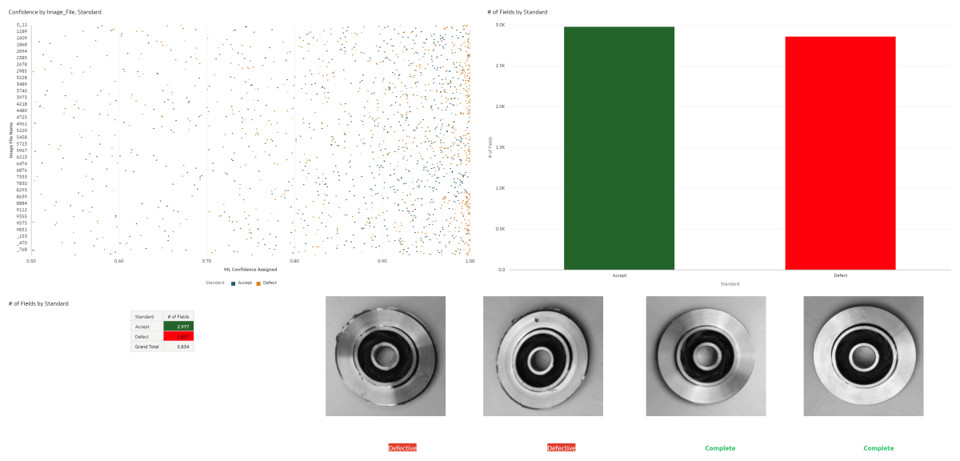
Yeah. So our smarter analytics solution is uh at its core statistical analysis of your data and um that in itself presents a quandry because it produces a lot of information as well. uh really in uh what can amount to thousands and thousands of records that show you information that again is very difficult to just look at and find any kind of patterns to it. But that's really its purpose with the statistical analysis is to find patterns. And after that particular step is done, we take those results and we produce um graphs and charts that are very meaningful and very easy to decipher to uh to make informed decisions about changes you want to make. For instance, you can look at uh uh transportation information and see that you are sending your goods to places that are probably farther away from some of the warehouses than you should. So by taking all of your years worth of data and uh running this analysis upon it and then turning that into visual representations that are easy to understand, you can see where you can save money by optimizing your warehouse uh operations.
Yeah, exactly. It's it streamlines the process of a lot of these people that are actually in need of utilizing this data. They don't have the data science background. They don't have the technical needs or abilities that a lot of the people truly should have when it comes to deciphering this data. And Smarter Analytics cuts through all that. It makes it as easy as it can possibly be to decipher a lot of this data. And it's honestly one of the most impressive things that yeah, like a regular person that is walking into a JD Edwards space, if they need to decipher this data and they don't have the specific degree or the knowledge or the knowhow, it can be very difficult. It can pro it can prove to be a very big problem and it would take a lot of time for them to do this. So you're completely right like it will streamline this process to make it simple, easy and a lot faster than what even a data scientist can truly do. It is very amazing honestly.
Data Science Lift, “Custom” Concerns, and Packaged vs Tailored Analysis
It is very amazing honestly. Uh but how does removing the need for a data scientist's background open doors for teams like finance or even supply chain to solve their own problems? Well, I guess I would say we're not exactly removing the need for data scientists, but we are taking that lift off of customers by doing that data science work ourselves for them. So, we have a team of data scientists essentially that are uh working through these problems and then offering solutions. So where maybe one of our canned uh analysis notebooks doesn't meet somebody's needs, we are in the position to offer that data scientist work and give customers their own custom solution. Uh while we do have a broad range of analyses and statistical work that we're doing, we also can offer custom solutions.
Yeah, exactly. And when people when we say the word custom, it is something that some people are like, "Oh, that means it costs more or whatever the situation is there." that that typically comes with the word custom to a lot of our customers. Am I wrong about that? Yeah. I mean, let's be let's be honest. Let's be honest. But the thing about this is we are already we have built it to where it is customized for every single one of our partners, customers, anyone that would really need this. And so that cost that would be different for um the package solutions out there. Every business is different. their all their data looks different. And so to say that this is a custom thing does not mean that it's going to cost more than anything else that you can find in the space. It just means that it will be built specifically for your company and that it will make it easier for you and for anyone that is trying to utilize this data.
Yeah, it it can be uh but we are also offering a really broad range of analysis that uh I think fits the vast majority of companies needs in order to understand their operations over time. very very true and honestly I didn't really think about that but yeah obviously we have a very broad range of what that data analysis could truly look like and so it is it is different when you're talking about a custom solution it basically just means that you're choosing specific packages that we already have built out so it's different than custom building is probably the better way of saying that.
Anomaly Detection Use Cases and How Insights Show Up Day-to-Day
But anyways uh what kind of costly mistakes or inefficient ies can anomaly detection help like a finance manager catch before they actually happen in JD Edwards? Um well our our initial group of tools has been uh really focused on sales and warehouse and transportation. And what we've discovered is um there's a lot of work that can be done with the transportation space and to determine you know where we're being inefficient with our stocking um and shipping operations. And then we also get a uh like through scatter plots and that sort of thing a great understanding of our inventory and uh inventory levels and whether we're meeting our sales requirements for time properly. So as far as you know return on investment in those spaces there's um there's a lot of good information that that we can see in our data in our representation in these charts that helps uh warehouse or inventory managers understand where there are opportunities to optimize the operations.
And exactly it it makes it simpler. It does. And when you're looking at a scatter plot or anything like when it comes to that specific types of data, and you said this earlier, deciphering a chart, deciphering a plot, it's a lot easier than going through spreadsheets of data and figuring out what it all means, trying to decipher that to a degree of simplicity that this truly does. But anyways, are these Sorry, I'm freezing a little bit. Gotta pause. All right, we're moving around. All right, I think I'm back.
Are these insights embedded into dashboards, alerts, or workflows? And how are they being consumed in the day-to-day? Um, well, the dayto-day as far as what we're uh seeing with a lot of our analysis, we can see where our profit margins lie within specific product lines. Uh, we can see which of our salespeople are being the most productive. we can see which warehouses or which sales organizations within the company uh are giving us the the greatest profit margins u and we can see that over time. So we can understand seasonality of our sales just by looking at uh our graphs and our information. And then on top of that, we also have a step in the data analysis where we're feeding this information into our own hosted large language model and we can get back insights from the model itself. So it can make recommendations that you may have overlooked or point out patterns that uh maybe still hidden a little bit.
Right? And when they're looking for these patterns, when a typical employee is looking for this, are they in a dashboard or is it more of an alert s system or is it just workflows? What does that kind of look like? Well, I think this is probably sitting a little higher than an average user. It would probably be more at a uh an operations manager kind of level where they would be able to see, you know, uh from 30,000 ft down on the organization and see where things are working really well or where maybe we could uh alter some products to try to seek out some extra margin.
Oracle ADW/OML Behind the Scenes and What Patterns Get Caught
Well, I was going to say a regular we we could make one of these for regular employees. The maybe the sales force for instance, uh if you have a competition going with your Salesforce to see, you know, who's going to make the highest sales, um we could track that and have that presented to them on their own individual um portal and then uh they could see where they are in the race. Yeah. which is honestly I mean we have our own sales team here of course and it is kind of interesting because we do have our own dashboards that are tracking our different sales and it is kind of cool because obviously we're not competing with each other we don't have the same uh territories but it is always fun to oh let's see how this person's doing let's see how this person's doing and they all talk a little bit of not going to lie but it's always fun because it's always it's never really malicious against each other because we're all in different territories. We all we want us all to succeed, but when you see somebody that is succeeding really well, it's great to break down. All right, you're succeeding a lot. What are you doing? What is your process? But it's great to see that data in a dashboard where it's available for even your managers or maybe it's available for everybody where you can see if somebody is doing well and you can ask them how are you doing this? What is your process? What are you doing that is different than what I'm doing?
So, it's great to have that type of conversation, especially this data available to you so you can actually have that conversation so you can track that you know somebody's doing well. And yes, I know we do talk each other, but it's fun. It's a good way of if there isn't a little bit of competition in your sales force. I mean, what are you doing? It's it's fun to have competition with each other. We're human beings. We're based on competition. And I might be wrong about that. There are people out there that hate competition. I'm not one of them. I love it. I absolutely would love it.
Well, there are some products where uh the salespeople are allowed to negotiate. For instance, uh one industry that I've worked in for a while was lumber and uh negotiating price was a big part of that. And so if you've got salespeople that are negotiating too far, maybe you need to rein some of that in. So uh there there's like I said there's enormous amounts of data that uh you can consolidate and turn into a graph and do analysis on it and then work on your operations to make them even more efficient.
Especially with lumber prices these days. I bet you wish you still worked there. I'm sure you'd be banking a pretty penny. to move back to more of what we were talking about. How does Oracle ADW and OML fit into the all this behind the scenes especially for people who just want answers and not code? Well, those are the heart of the solution. The um the data warehouse is where we're moving the data to in order for it to be processed by the machine learning and statistical analysis tools. And really uh as a partner of Oracle, I mean we uh are using their tools and they're extremely robust and they're supported by Oracle. So we uh we're relying very heavily on their statistical analysis tools to break down all of this data and perform uh all the work that gives us the the heart of this entire solution.
After that all of that work is done then we're turning it into charts. So, uh, without all of that background and foundation work that they've provided to us, we, uh, we don't have anything to base our charts on. Um, but, uh, Oracle is giving us a great set of tools and, uh, it's, you know, top-of-the-line industrial.
Yeah, Oracle has always been on the cutting edge of a lot of this stuff and it's great that we have such a strong partnership with them when it comes to a lot of our products that are out there right now. Especially for this one though, they know their data and they have been one of the largest data warehouses that we've seen in a lot of these years. Yes, they there are some personal opinion about which one is best. If you want to look at that, we actually have a podcast about it with Stuart Peterman that came out a few months ago. So, please go look at that if you want to decide which data warehouse is the best for you. Um, but there is a lot of great cutting edge technology that they have really rolled out over the past 5 years, even 10 years, even 15 years. They've been doing this for a long time. Like JD Edwards says, wait, we had a podcast with uh Frank Jordan and he carbon dated me. He talked about a floppy disc. I've never I I have never seen a floppy disc in real life, which is crazy to say. I know what they are. I know what existed. I know that JD Edwards started on a floppy disc. I've never seen how they plug into a computer ever. I I never understood that process. But anyways, enough about how young I am, I guess.
Uh but what types of financial or operational issues are most often caught and what's the cost of truly missing there? Um well, patterns is what we're really finding. Uh that that's really what all of this analysis does is it finds anything that uh is anomalous or outside of specific ranges. So uh if if there's anything in the operations data that uh is statistically significant in any way, it'll be caught and found out and shown to you. So, uh, stock shortages or people that are operating, uh, outside of what you consider to be normal bounds. Maybe they're um um, their sales numbers are a little too big. Maybe they're a little too low. You know, there's um, anything that's outside of the range of normaly will stick out. So it might be R&D R&D expenditures in the financial realm that that stuff you know none of it stays hidden.
Real-Time Savings, Scaling Without Big IT, and Closing Wrap-Up
But have you seen examples where the savings or avoided losses in this case were clear within weeks or even months? Oh, a lot of it can be seen in the same day. Um we have yeah we have um some of our charts that look at specific orders and point out specifically how you could have saved uh money by sourcing it from a different warehouse and that's before it even leaves the building. So, um, yeah, there's a lot of information that can lead to immediate savings, uh, or immediate actionable items before the transactions even complete.
Yeah. Which is very impressive that almost in real time it can catch this stuff because there are a lot and I'm not going to name names and bit talk other applications out there. It's not what this is. there's a lot that isn't happening in real time that maybe it'll take a day or take two days, 3 days, 4 days, whatever the amount is. And at that time, if your business is rolling and you're doing a daily shipment thing, that can be very problematic. This can catch in real time. It can catch on the day that it happens. that can save you a lot of money or can save a relationship or can save your business if it is one of those struggling times of you need this order to go through and you need it to be right. So it is something that yeah, you might not find value in it just looking at it at face value, but if you look deeper into it, it can bring a tremendous value to your company in terms of showing you what you need to know and when you need to know it. And it's as simple as that.
But for companies that don't have a big IT bench, how realistic is it to scale this product? Um, well, see, that's that's the thing. We're doing the heavy lift here. So, you don't need to have a large IT department in order to get uh payout from this because uh really our solution is able to from the outside go in through REST services and extract the the data that needs to be analyzed. Uh you don't have to take part in in that or trigger anything manually. Uh a lot of it's set up to be automated and you can specify how often you want it to happen, maybe every hour. And of course there are some limitations on you know how much data we can move over time but say you want a rolling uh data update of uh every hour then um we would do that run the analysis on it and it immediately shows up on the dashboard and the the dashboard itself is all based on live data in Oracle tables.
Those tables are populated immediately uh during the uh statistical analysis notebook runs and we have six or seven notebooks. They'll run um just a couple of minutes and the data update or upload like I said is uh defined by the customer and their needs and how their operations function uh and their need for real-time information. So they uh it works behind the scenes essentially and the uh the dashboard show shows you the results. So you don't have to take any part in that or have any kind of IT intervention on the customer's side for it to operate.
It's very beneficial obviously. I mean I've harped on it a little bit too much today. I'm sure I'm sure a lot of our listeners are like yeah man come on I know this is great. can just move on. Um, but there is a lot of benefits that you can see from a continuous rolling update, especially with smart analytics like this is just if it's continuous, if it's always checking, if it's always populating obviously every hour, if that's what they want to do, if they want to do it shorter or longer, it's completely up to them. It depends on what your business model looks like. So there is a lot of benefit to it and it's very customizable for everybody that through every industry that you could possibly think of.
Yeah. And um you know still on on this particular topic I've uh been a technical consultant for 20 years and um customers they want to know it works. They want to know that they don't have to fiddle with things or that kind of worry about something breaking. They want a product that is going to be seamless. And uh my philosophy for software design is that uh I want it to be as bulletproof as possible. I want it to be as uh uh just co coherent in its solution to offer what is intuitive to the user in its use and function and presentation. And um that's how we've designed a lot of these solutions. So that there's no intervention on the customer side and the stuff looks really good and it works every day no matter what.
It's awesome. Now if only we can come out with one for sports betting. I think that we could make some serious money. All right. Thank you. I got you. I know.
Oh, but if you're ready to make machine learning work for more than just your IT team, ERP Suites is here to help. You can explore Sparter Analytics, see anomaly detection in action, and even try our ROI calculator at erpsweets.com. Links will be in the description below. But that's a wrap for today's episode of Night Grandpa's JD Edwards. Huge shout out to you, Mario, for showing us how AI can empower every department, not just the data geeks. And I know this is no offense the geeks out there. So am I. If you found this episode helpful, be sure to like, subscribe, and share it with your finance ops or procurement teams. Till next time, keep it smart, keep it simple, and keep modernizing your JD Edwards system. Thank you.
.png?width=960&height=540&name=Blog%20Images%20(82).png)
.png?width=960&height=540&name=Blog%20Images%20(68).png)